

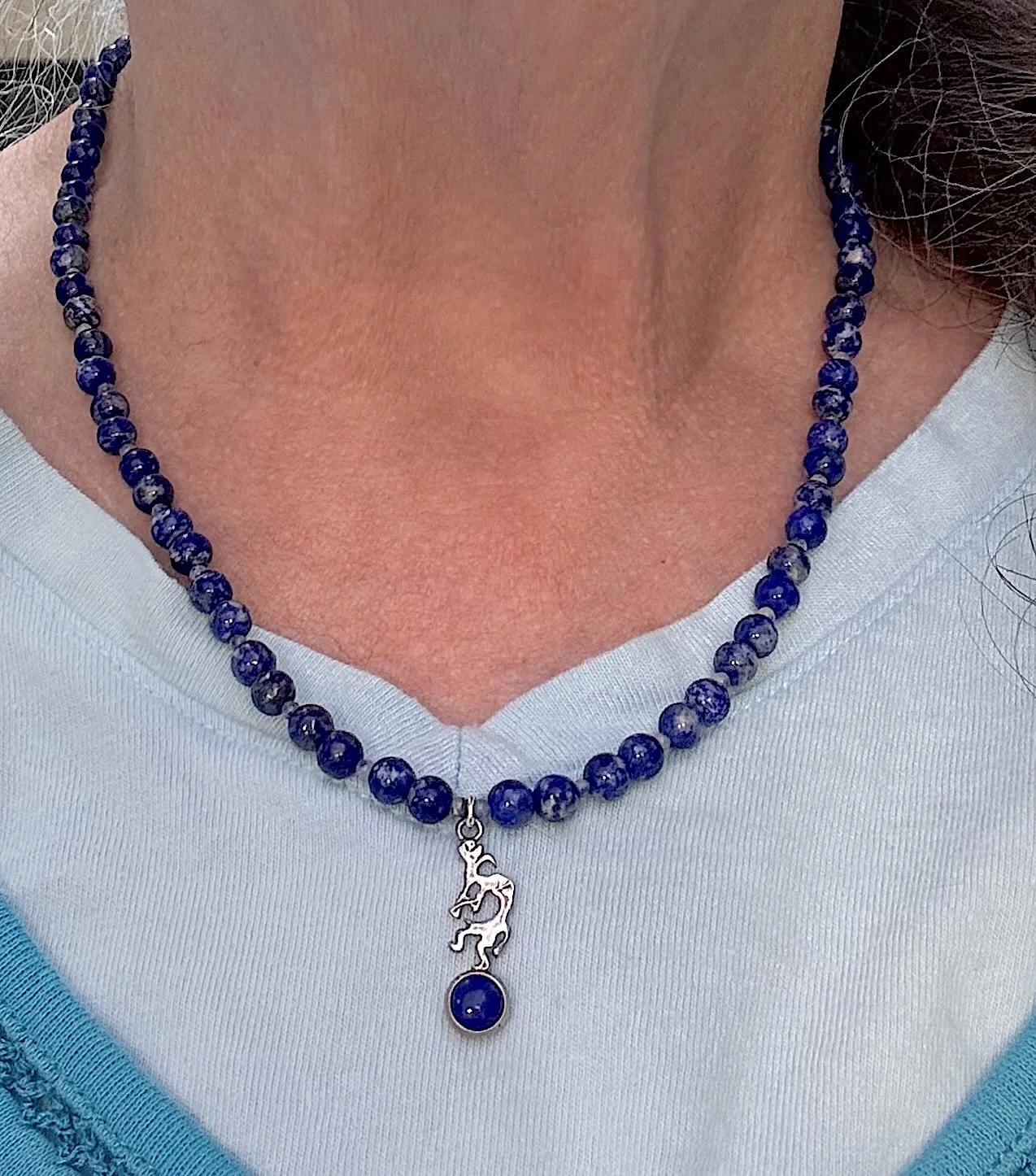
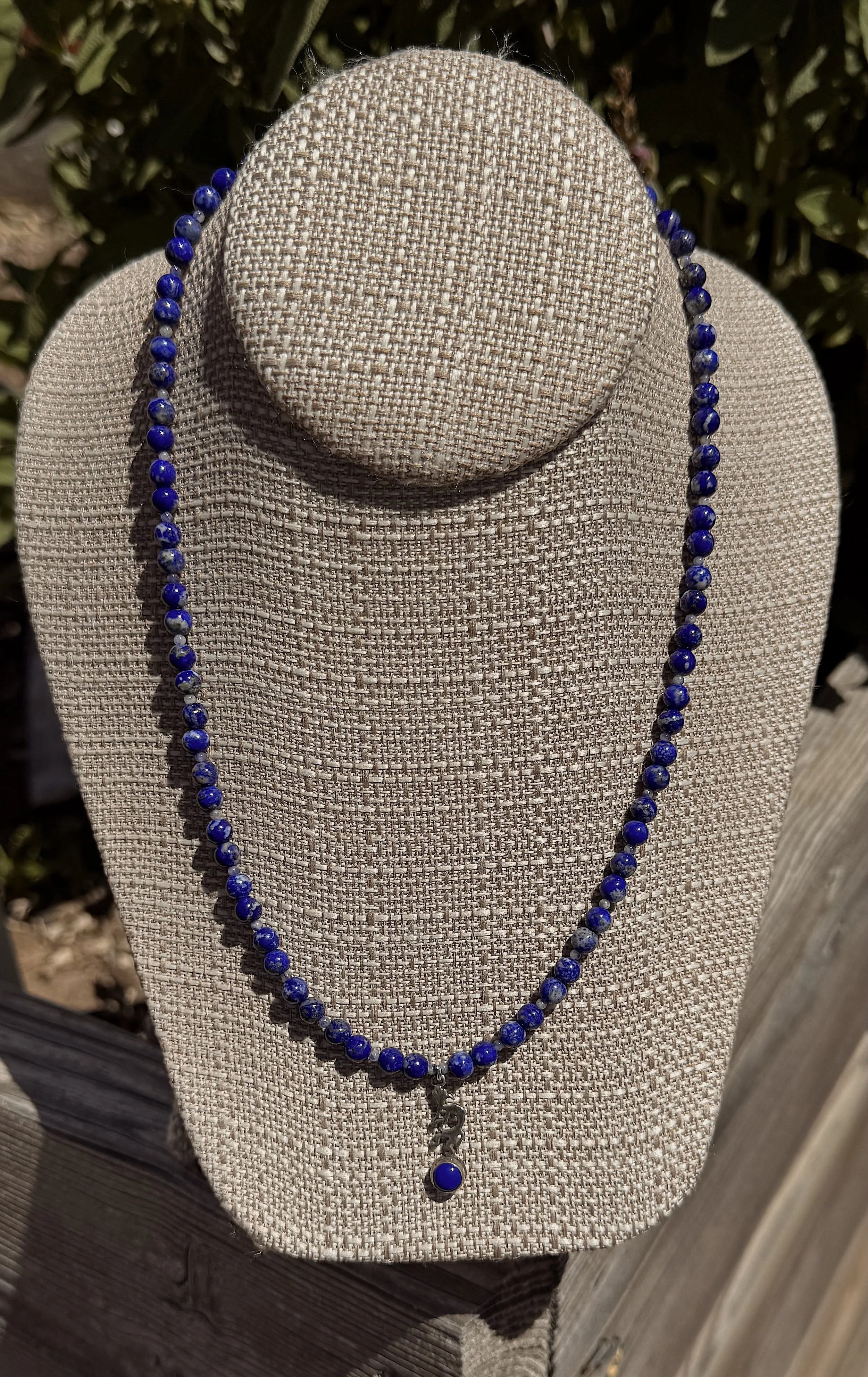
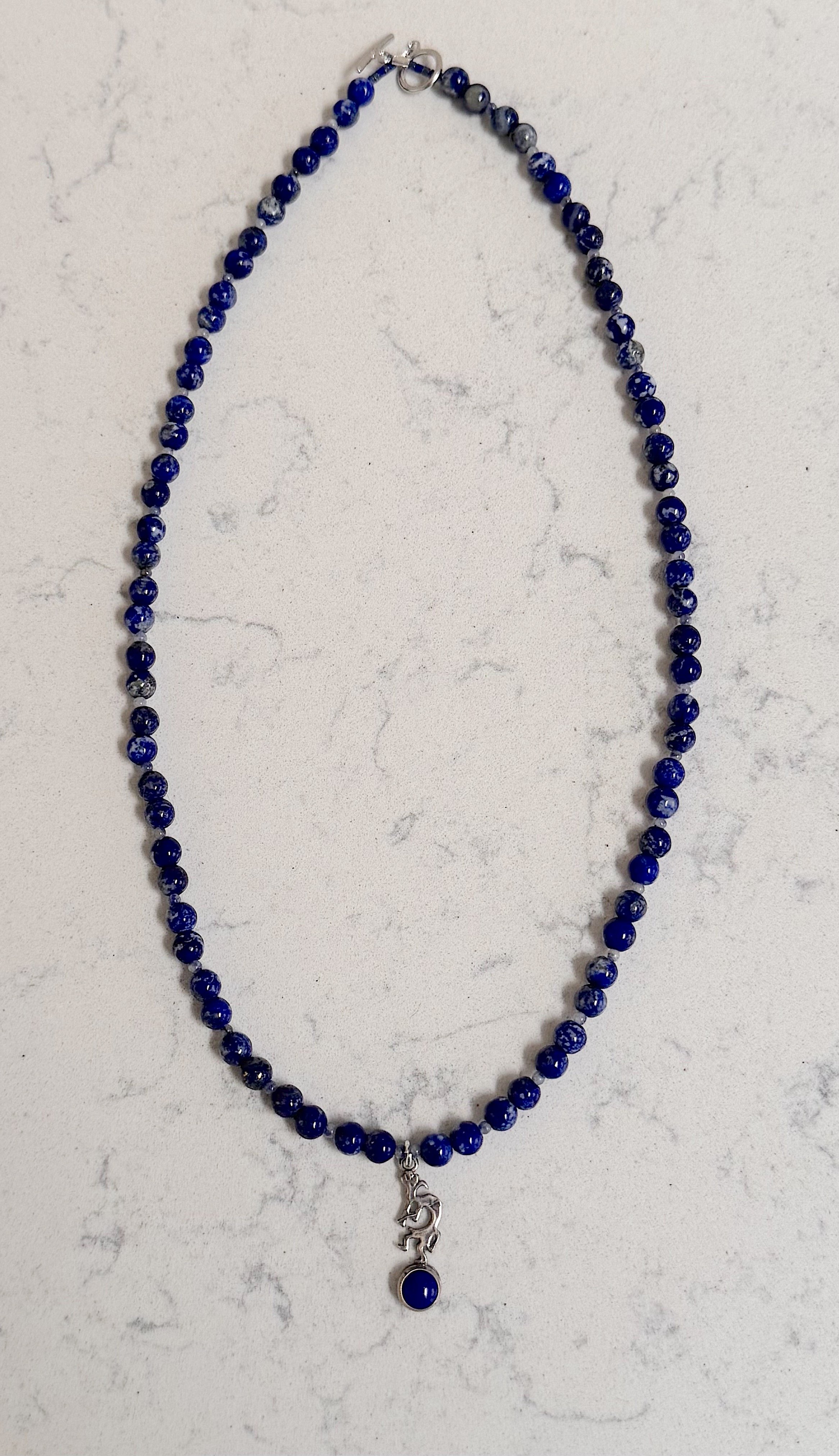
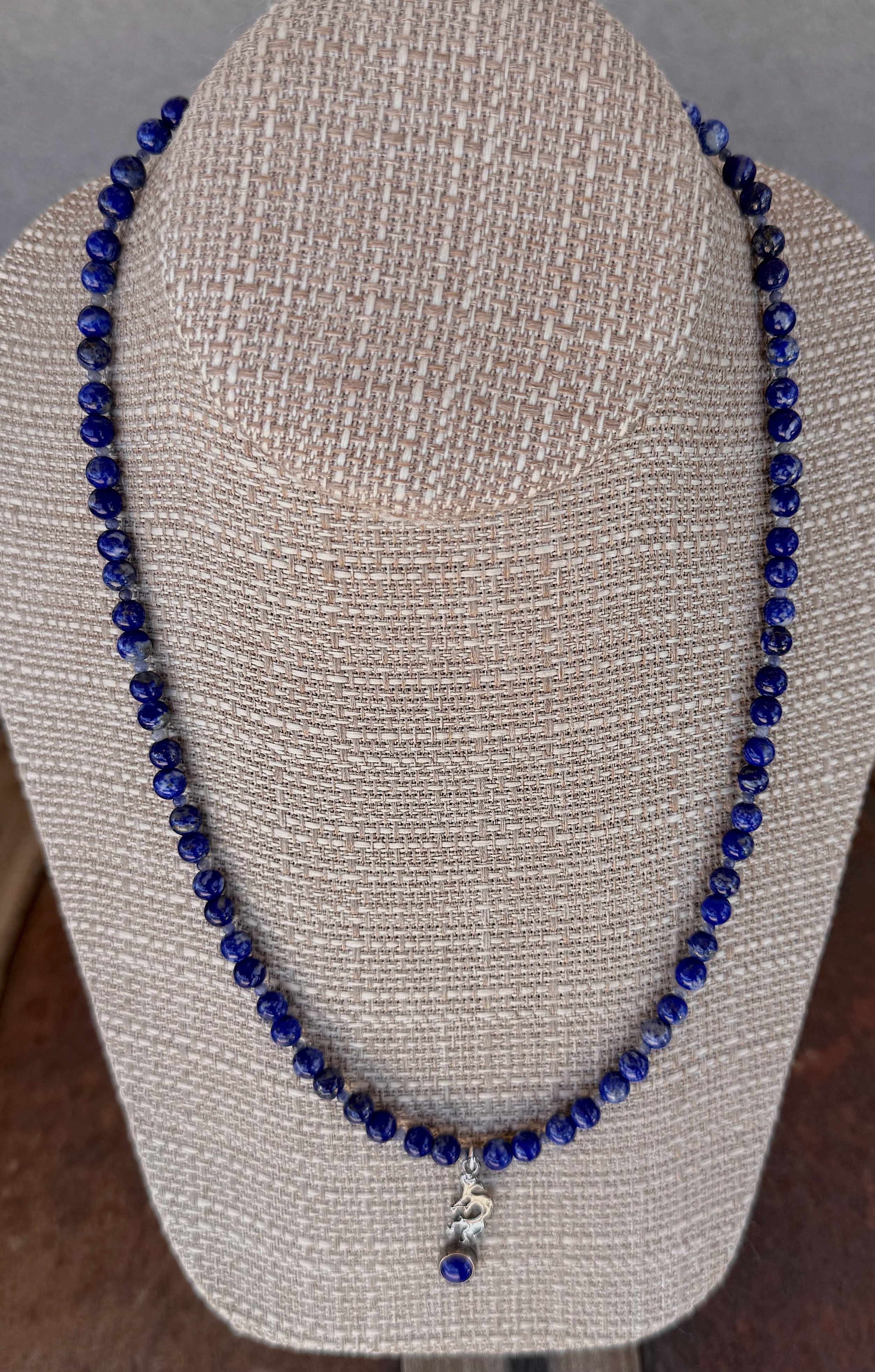
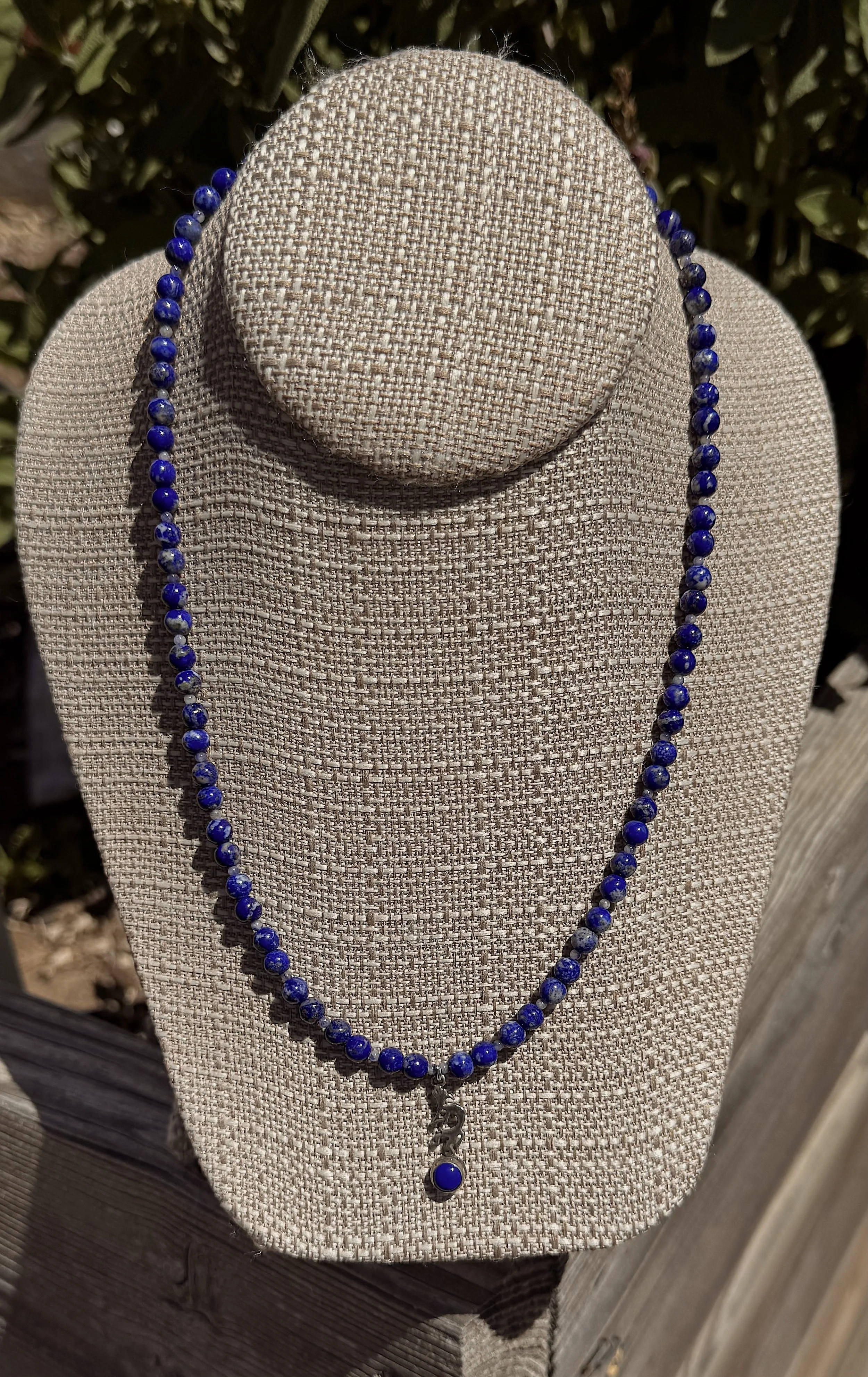
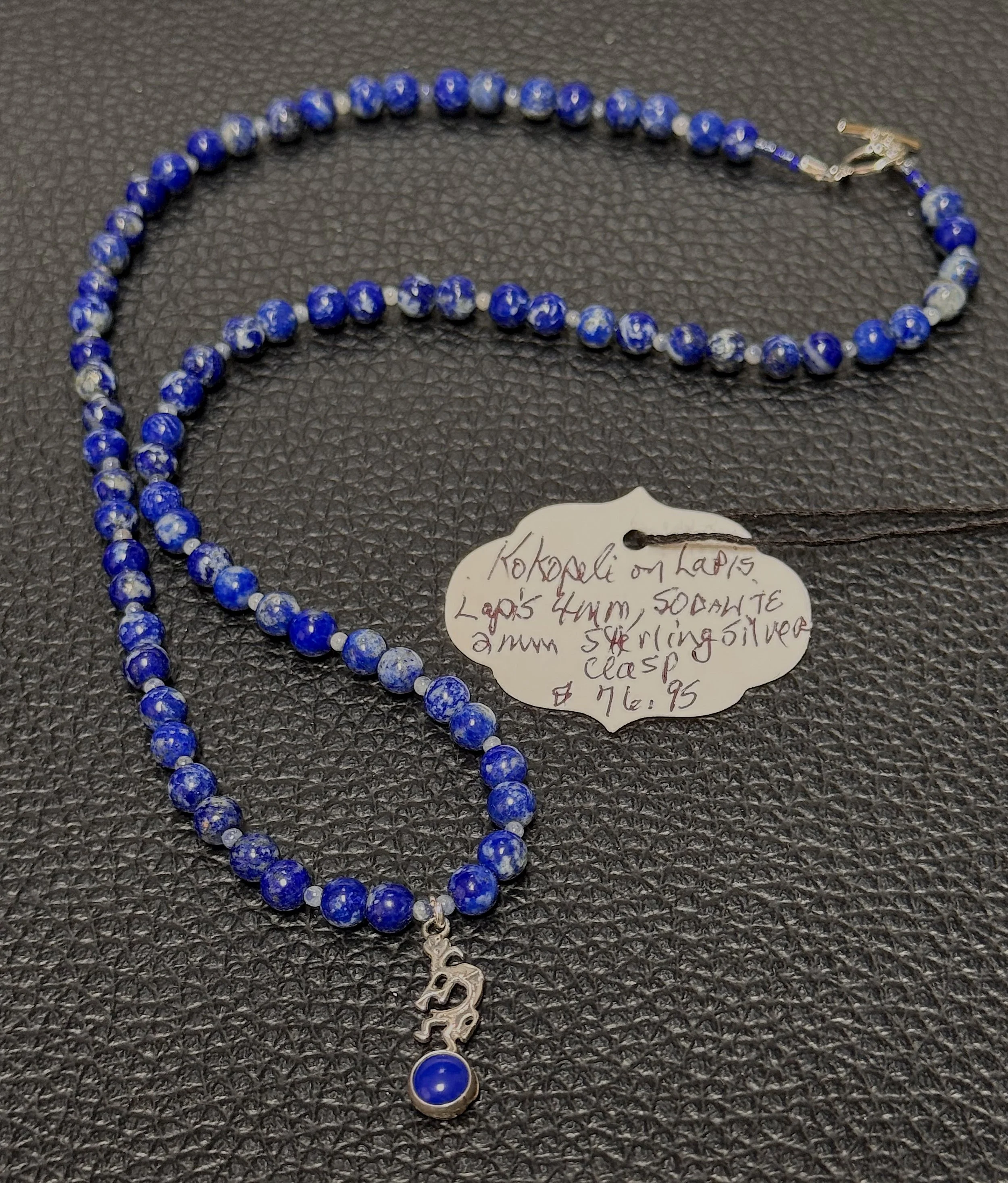
Kokopeli on Lapis. Sterling Silver Kokopeli pendant with Lapis and Sodalite
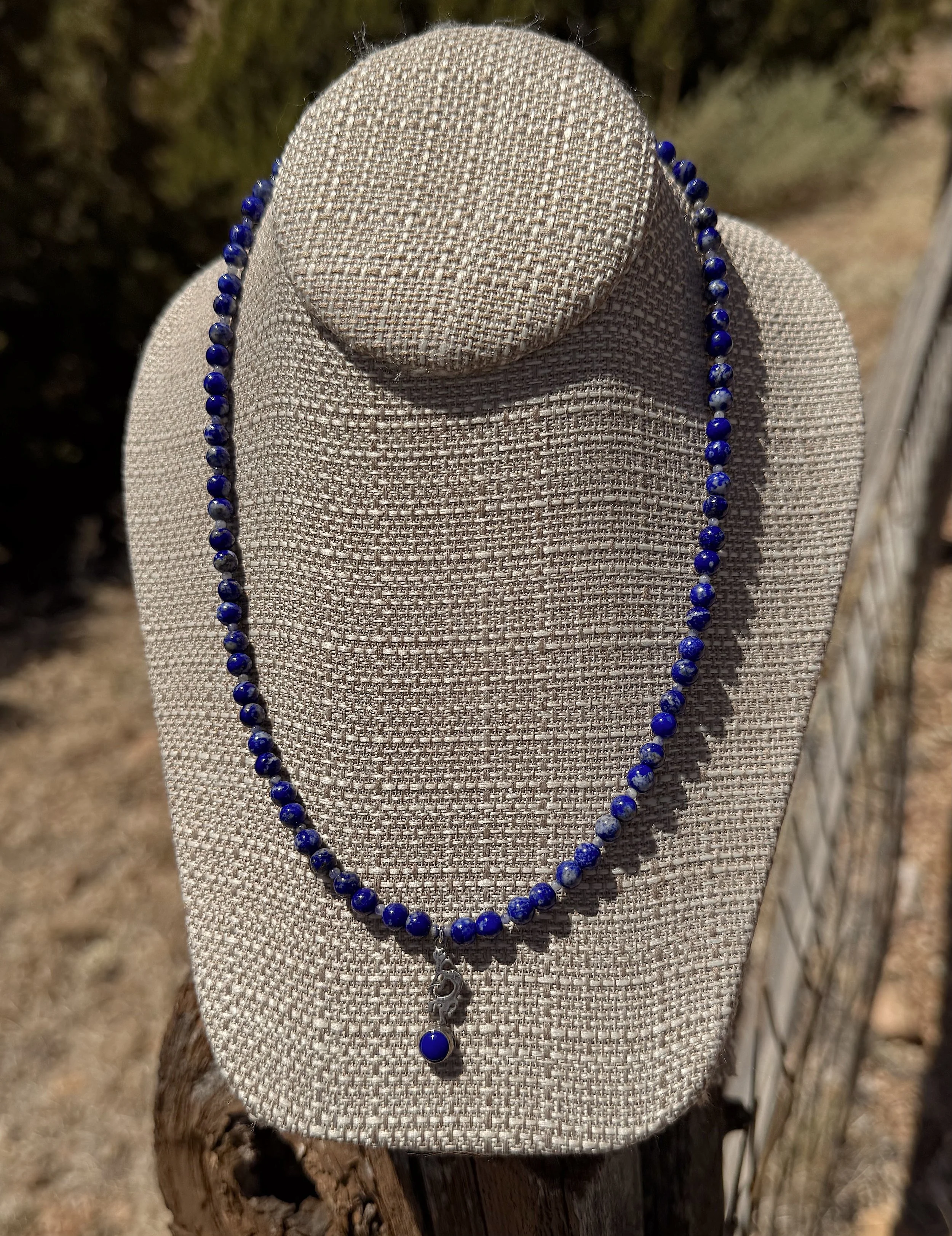
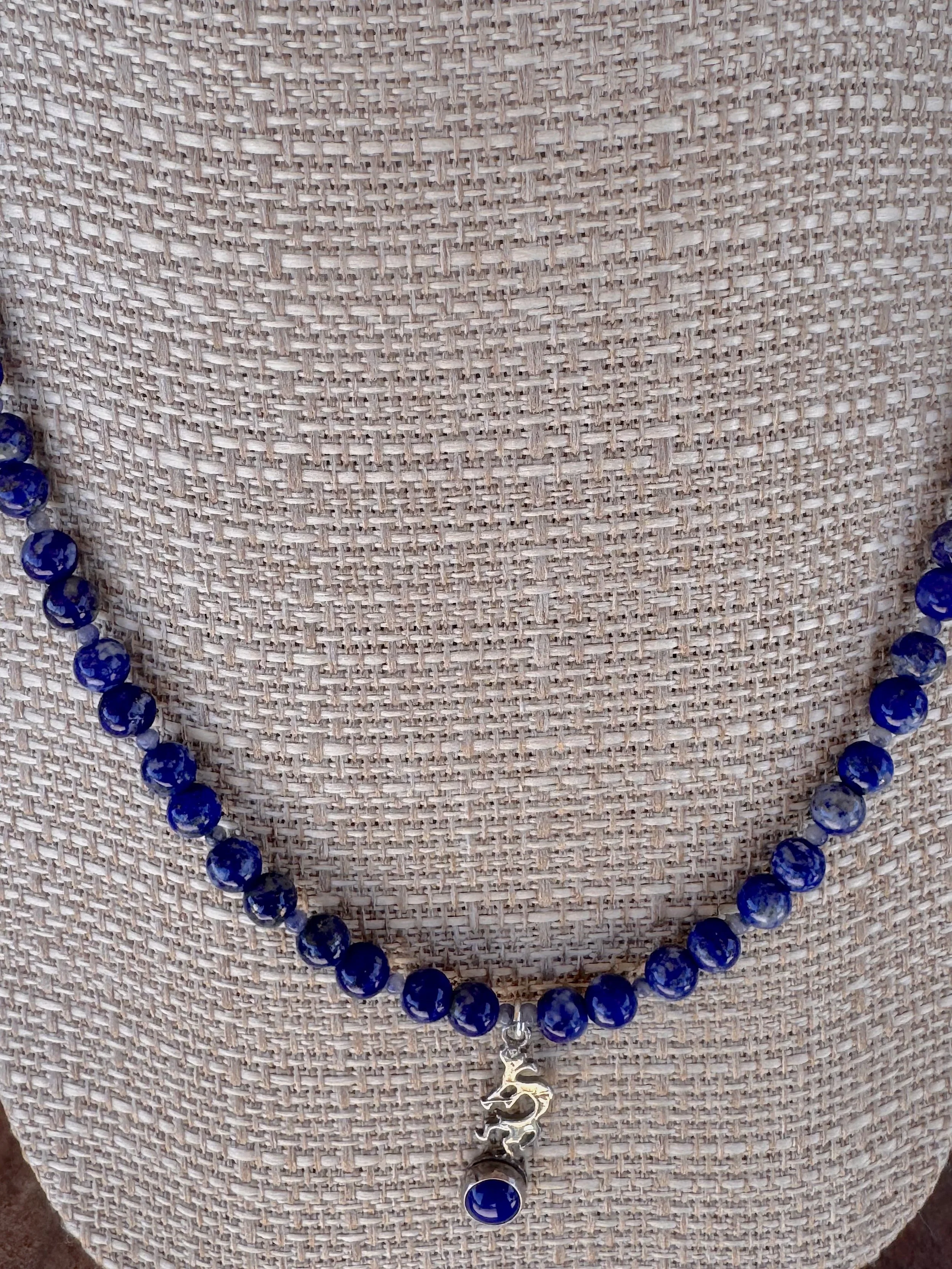
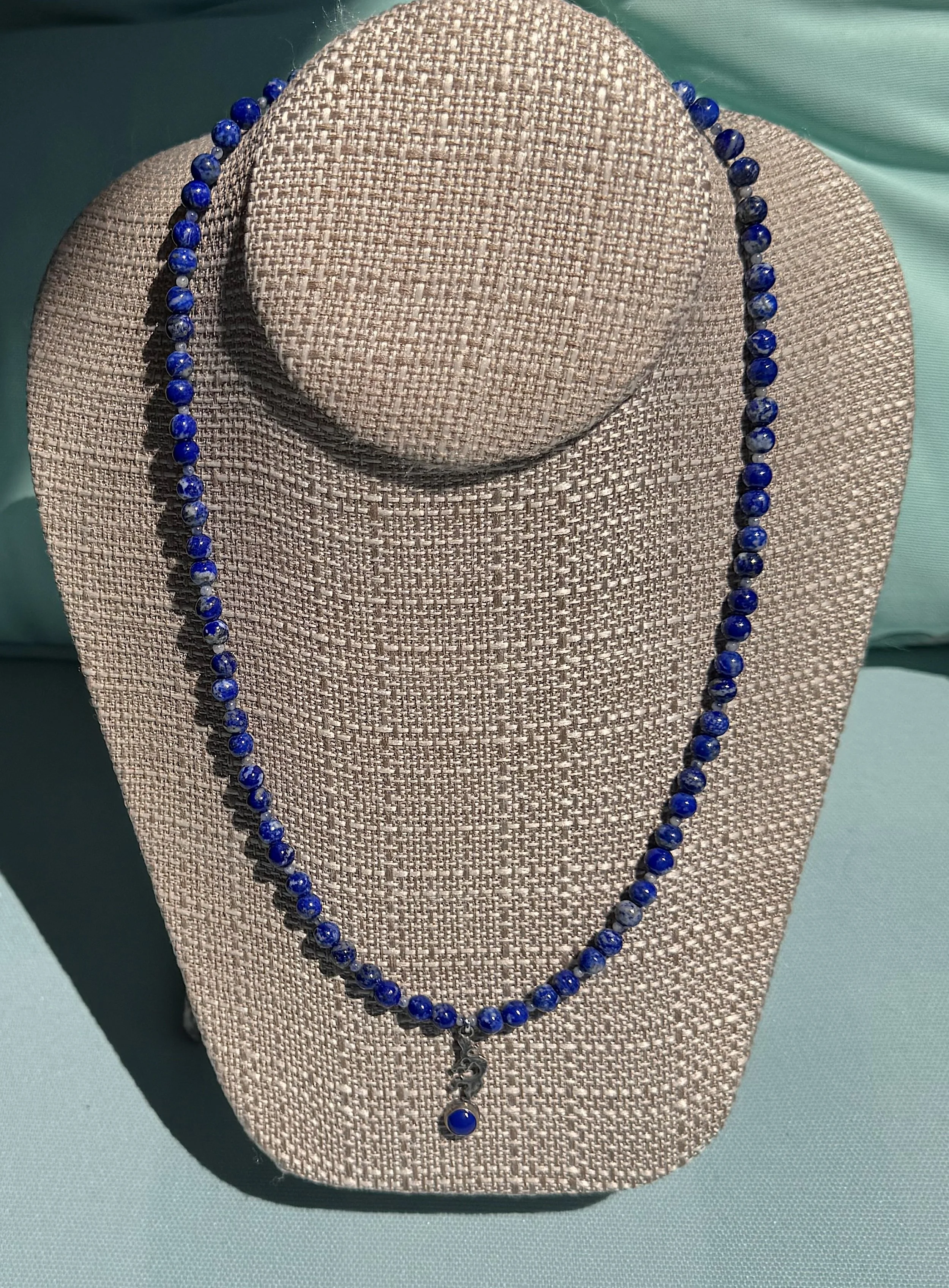
Kokopeli on Lapis. Sterling Silver Kokopeli pendant with Lapis and Sodalite
Legend says that in the Southwestern territories of the USA, Kokopeli would stand at the edge of a village and play his flute to lure all of the children away from danger. They would follow his music, and him, to a safe protected place out of harms way. He was considered a protector of the children and also represented good fortune for bringing future children to the clan. This necklace is called Kokopeli on Lapis, because it seems like his playing his flute standing on top of a beautiful blue mountain!
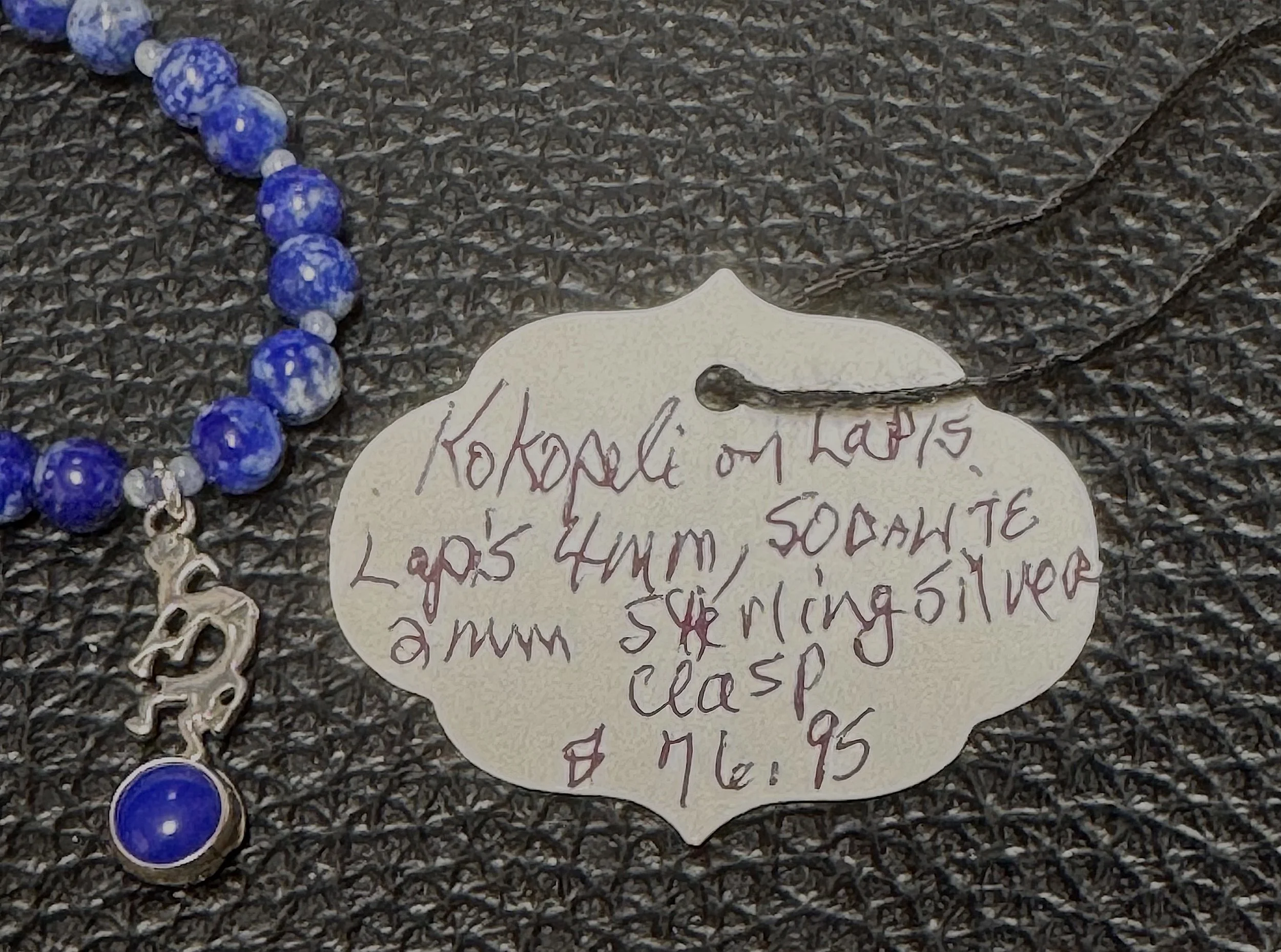
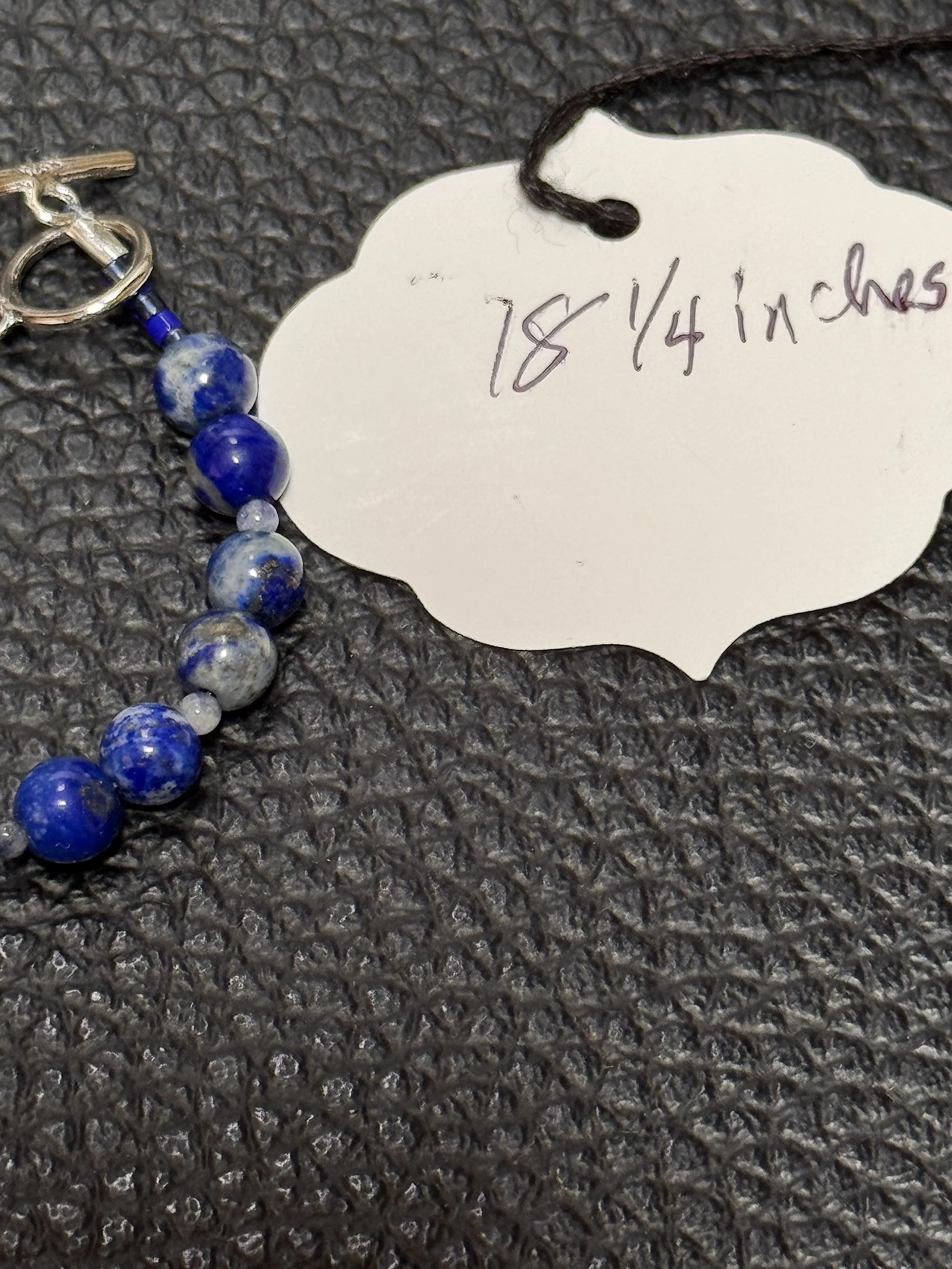
I used 2mm Sodalite beads and 4mm Lapis Lazuli beads for the 18 1/4 inch necklace. There are Delica Glass spacer beads and a Sterling Silver toggle clasp at the ends.
firemountaingems.com says about Lapis, "The Sumerians believed that the spirit of their gods lived within the stone, while the ancient Egyptians saw it as a symbol of the night sky. Since the earliest of times, Lapis Lazuli meaning has been associated with royalty, strength and courage, wisdom and intellect, friendship and truth.
From antiquity, Lapis Lazuli has been worn in the belief that it will ward off evil. In ancient Egypt, it was powdered and worn about the eyes to improve eyesight.
Lapis lazuli meaning is associated with the third eye chakra. It is associated with imagination, intuition, and focus." It's thought that wearing cobalt blue around your neck will help you to "Speak Your Truth"!
"For a stone of frequent mistaken identity, Sodalite is unimaginatively named for its sodium content. The more poetic "poor man's Lapis" is a common nickname for this beautiful blue-and-white mineral. Sodalite and Lapis Lazuli can be easily mistaken for each other at first glance; however, Lapis contains flecks of pyrite, which is where the stones differ. To complicate matters, Lapis Lazuli (which is technically a rock) may sometimes contain Sodalite (which is a mineral in itself). Sodalite is sometimes also confused with Azurite , Dumortierite and Lazulite. Additionally, in Canada, Sodalite can be referred to as "Princess Blue" because it was found in Ontario in 1891 during the visit of two members of the British Royal Family.
The stone was known across the Americas before its official entry into Western mineralogy, however: around 2,600 BC, the Caral peoples traded for Sodalite in what is now Peru, as did the residents of Tiwanaku in modern Bolivia.
Sodalite is sometimes considered a guardian for heroes and heroines, especially those speaking truth to power. It's believed to have the ability to unite logic with intuition and the drive for truth with the rise of idealism. Practitioners have used Sodalite to organize the mind, as it's said to promote rational thought, objectivity and perception. It is sometimes thought to cleanse lymph nodes and boost the immune system. All these balancing abilities are why Sodalite is often used in groups with other stones and among multiple users. Sodalite is assigned to the western astrological sign Sagittarius. In feng shui, it is thought to possess water energy."
Finally, as per indigenouspeople.net, "Known as a fertility god, prankster, healer and story teller, Kokopelli has been a source of wonder throughout the country for centuries. Kokopelli embodies the true American Southwest, and dates back over 3,000 years ago, when the first petroglyphs were carved. Although his true origins are unknown, this traveling, flute-playing Casanova is a sacred figure to many Southwestern Native Americans. Carvings of this hunch-backed flute-playing figure have been found painted and carved into rock walls and boulders throughout the Southwest.
There are many myths of the famous Kokopelli. One of which is that he traveled from village to village bringing the changing of winter to spring; melting the snow and bringing about rain for a successful harvest. It is also said that the hunch on his back depicted the sacks of seeds and songs he carried. Legend also has it that the flute playing also symbolized the transition of winter to spring. Kokopelli’s flute is said to be heard in the spring’s breeze, while bringing warmth. It is also said that he was the source of human conception. Legend has it, everyone in the village would sing and dance throughout the night when they heard Kokopelli play his flute. The next morning, every maiden in the village would be with child.
Whatever the true meaning of Kokopelli is, he has been a source of music making and dancing, and spreading joy to those around him. Even today, Kokopelli, with his hunchback and flute, is always welcome in our homes.
The legend of Kokopelli (pronounced "Coke-a-pellie") is well-preserved in ancient rock carvings and paintings dating back as far as 3,000 years. His legend however, is no less popular today - having survived more than one hundred generations."
This happy and pretty necklace will bring joy to you, whatever you think of Kokopeli!