
Blue Jean Baby, 2 strand Blue Chalcedony and Lapis necklace
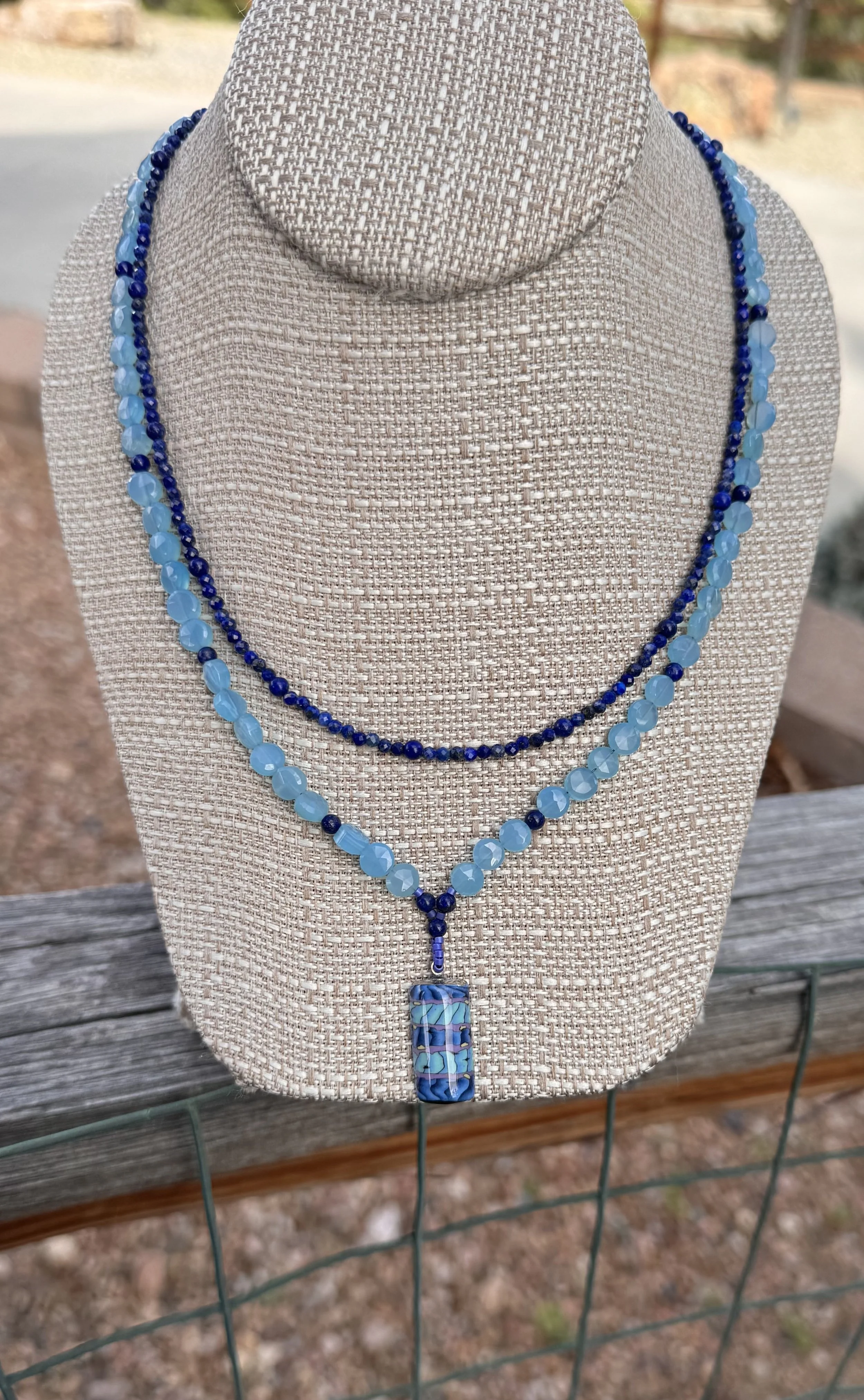
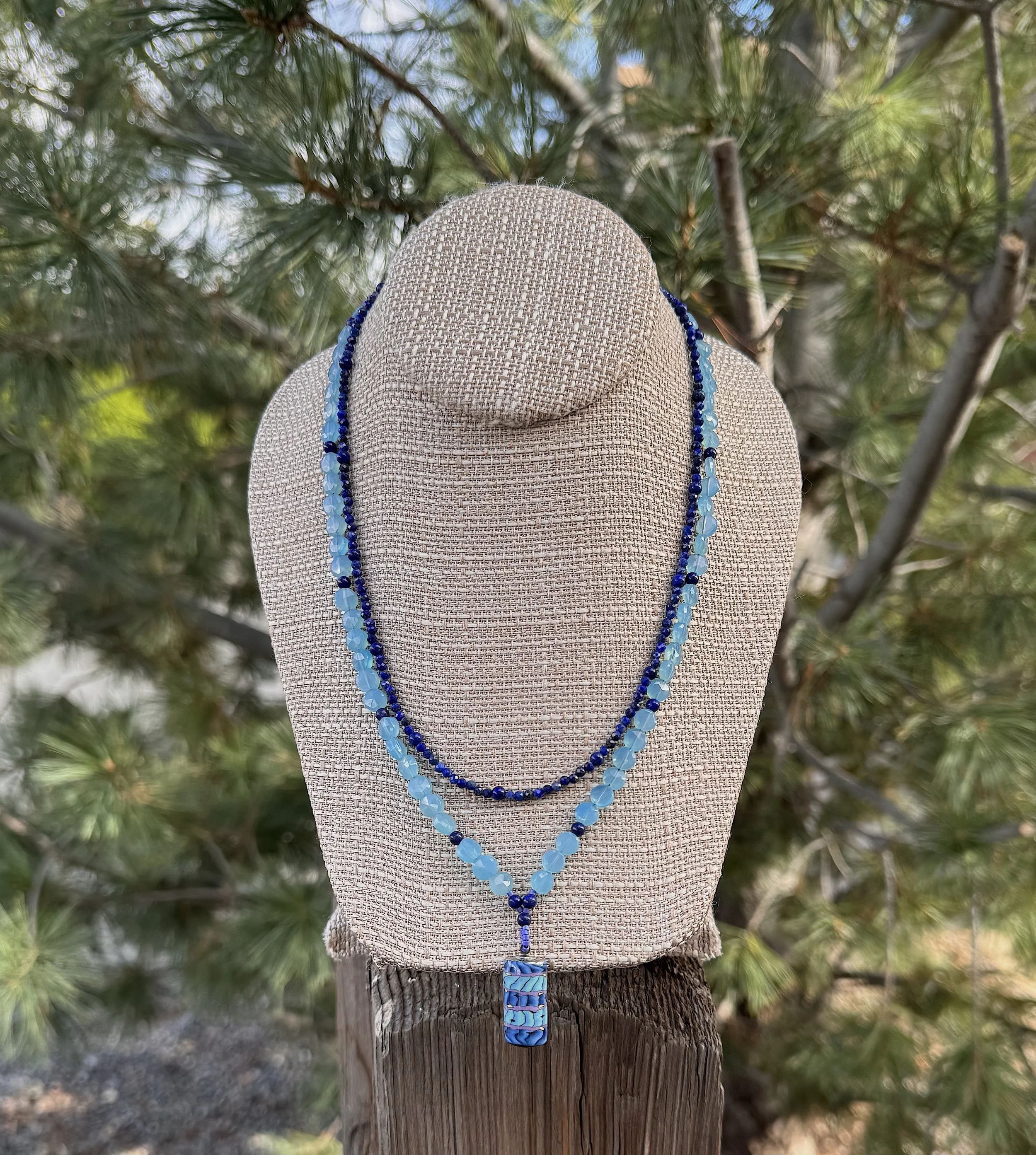
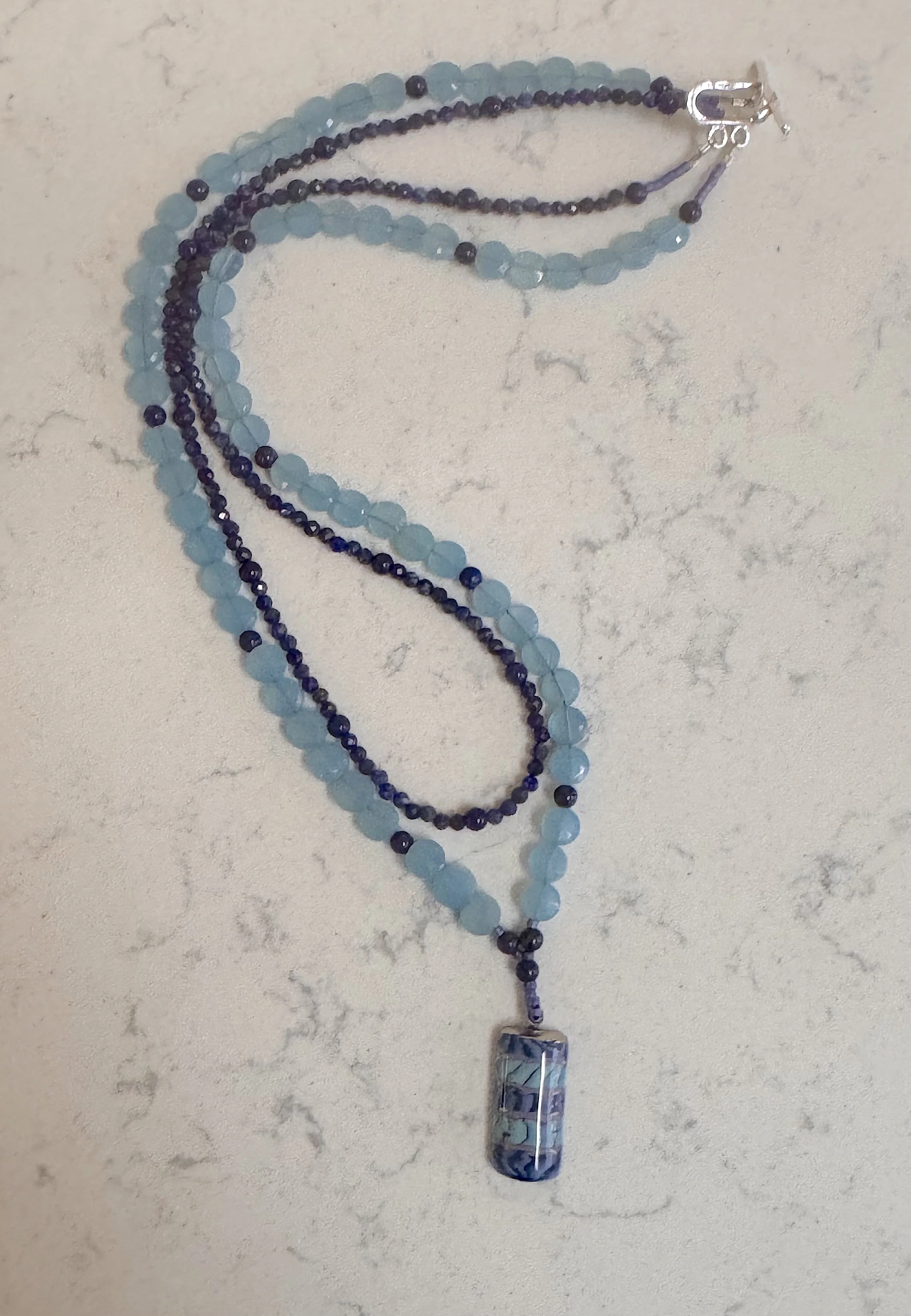

Blue Jean Baby, 2 strand Blue Chalcedony and Lapis necklace
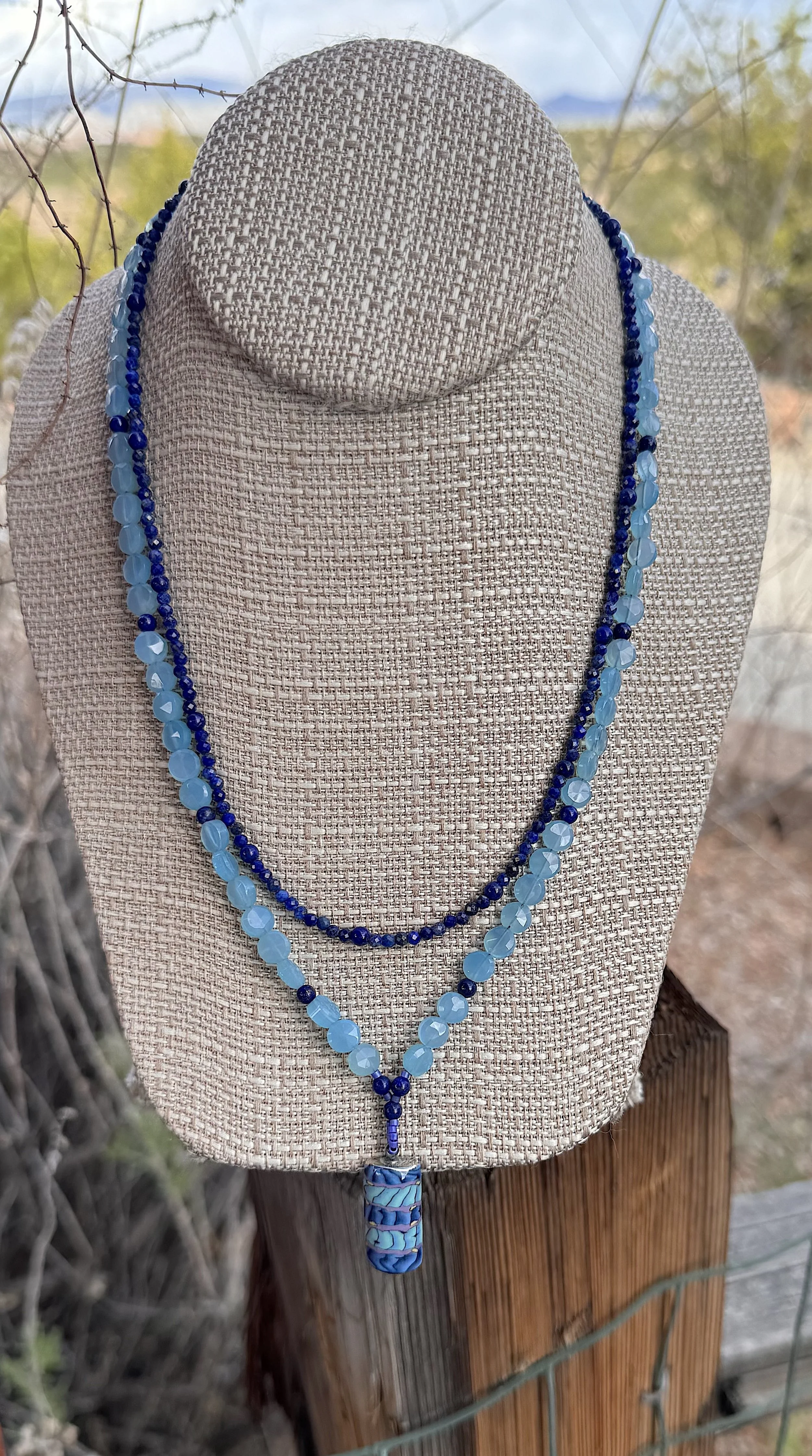
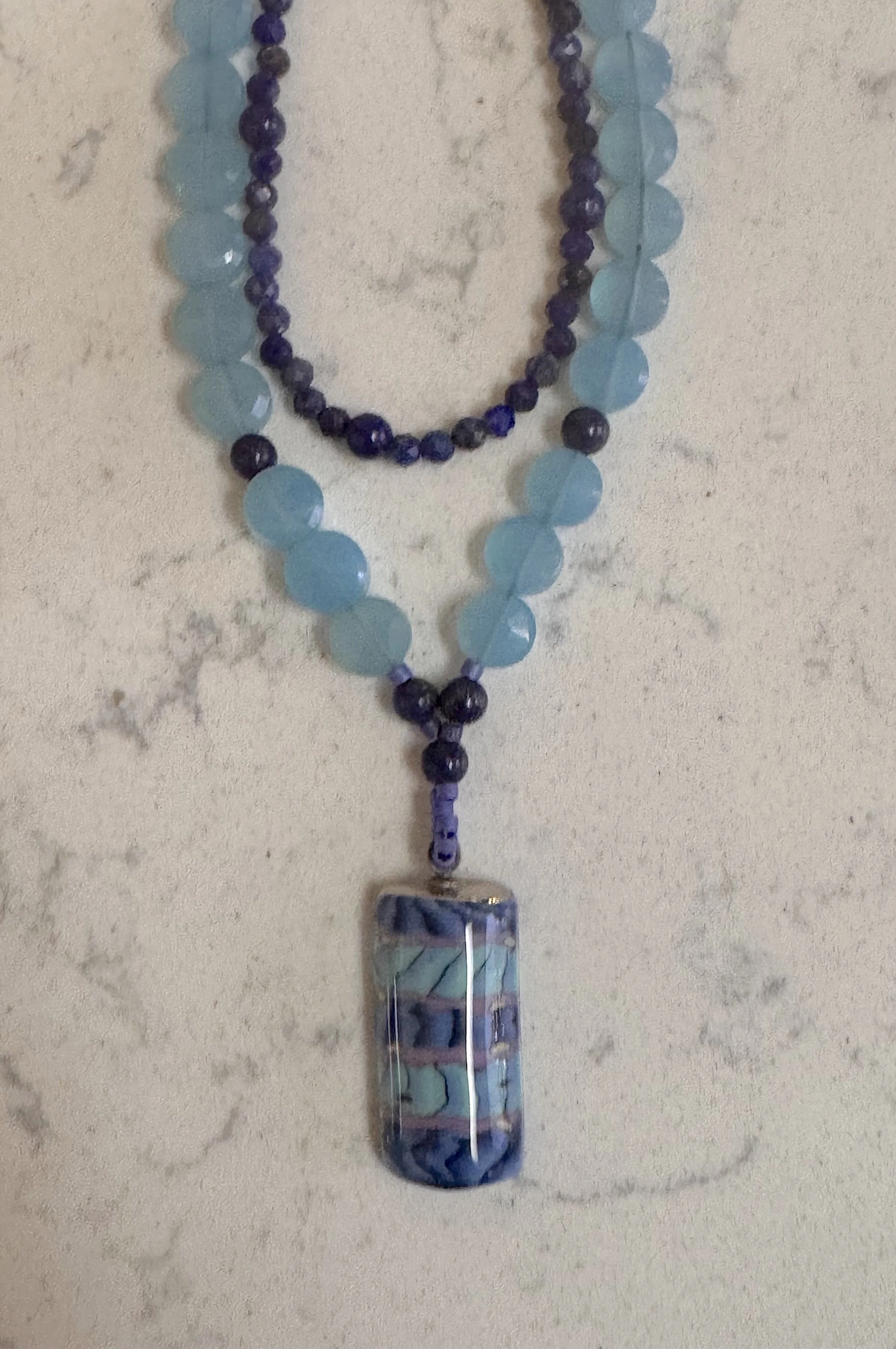
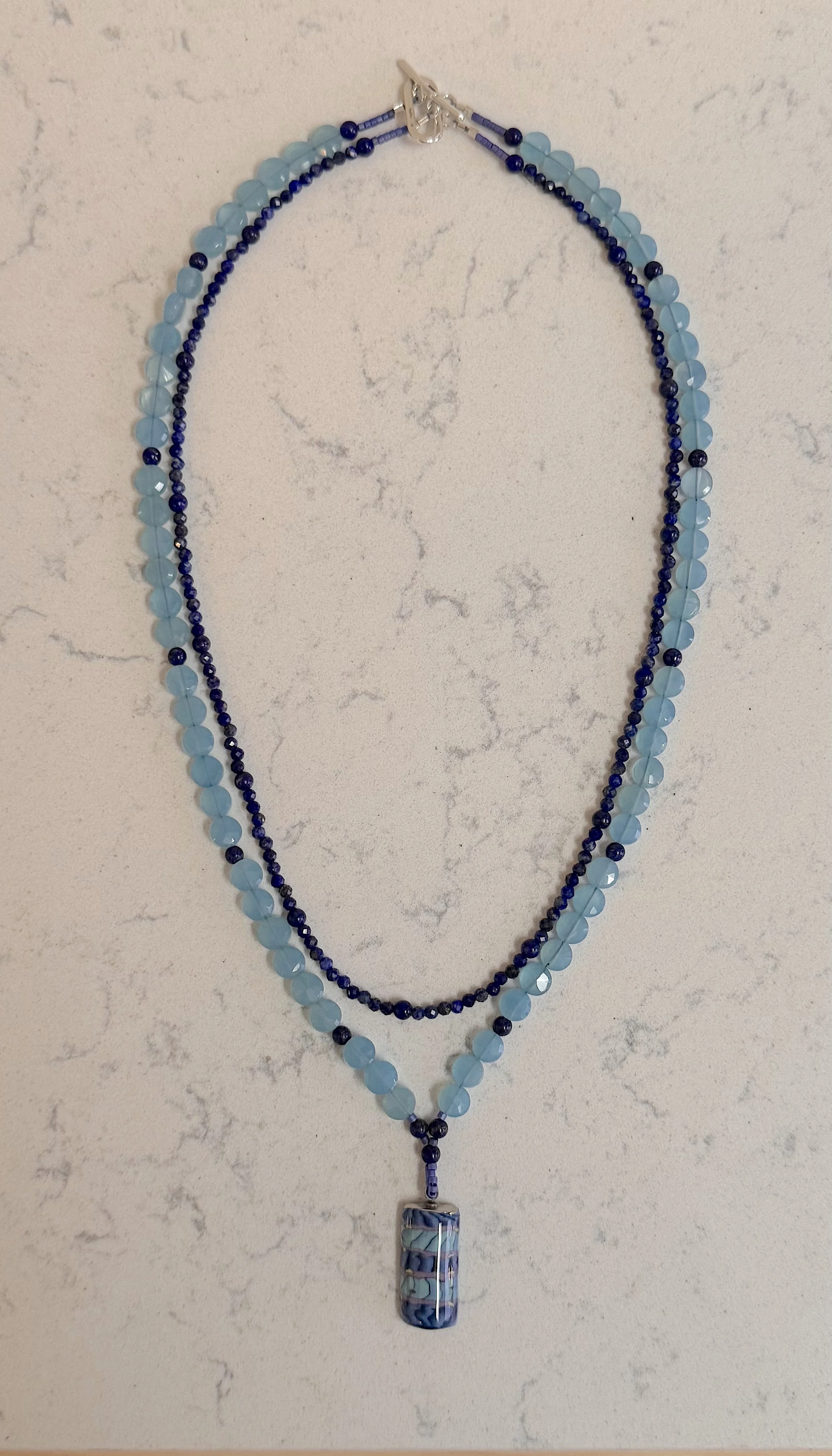
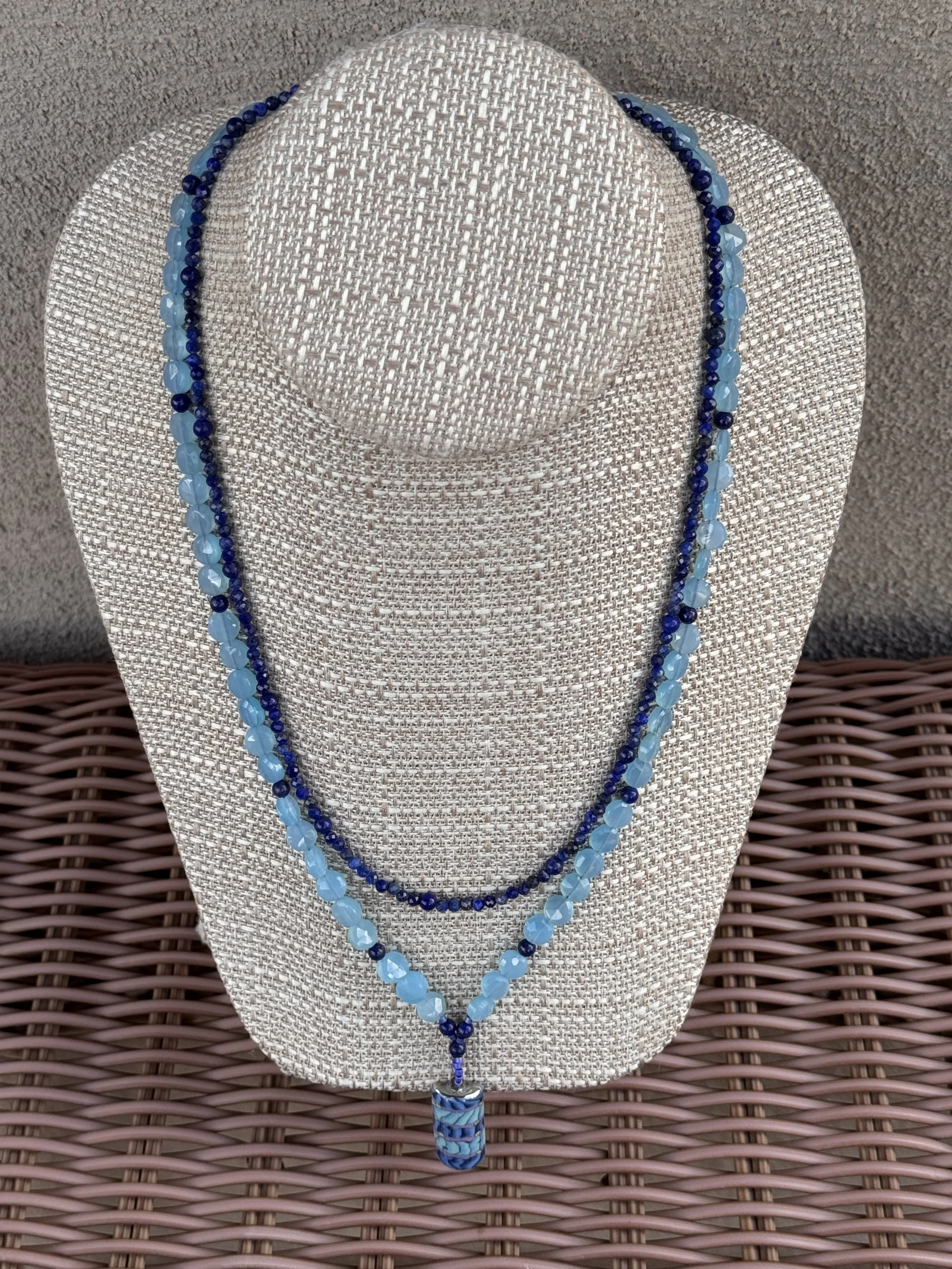
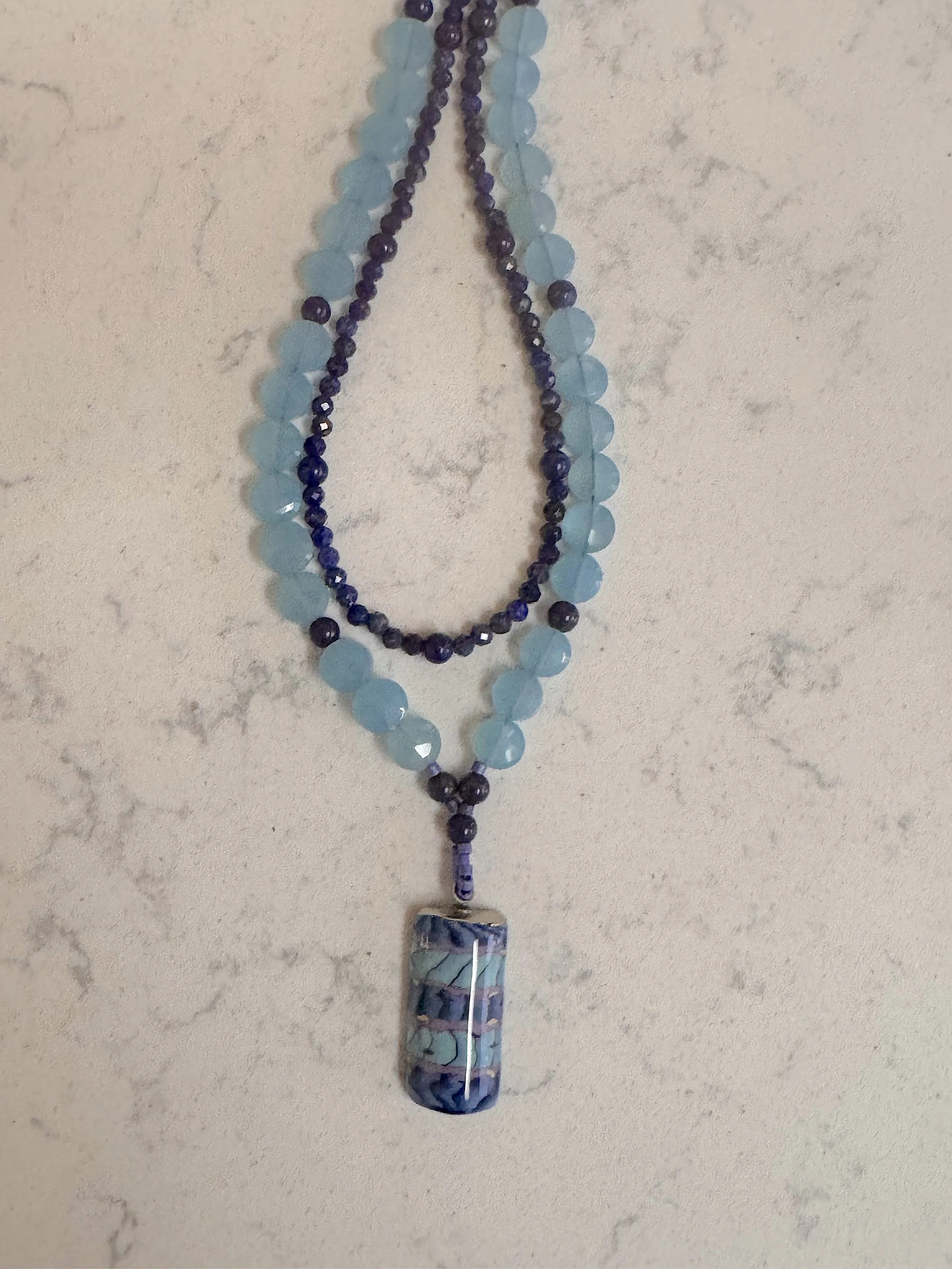
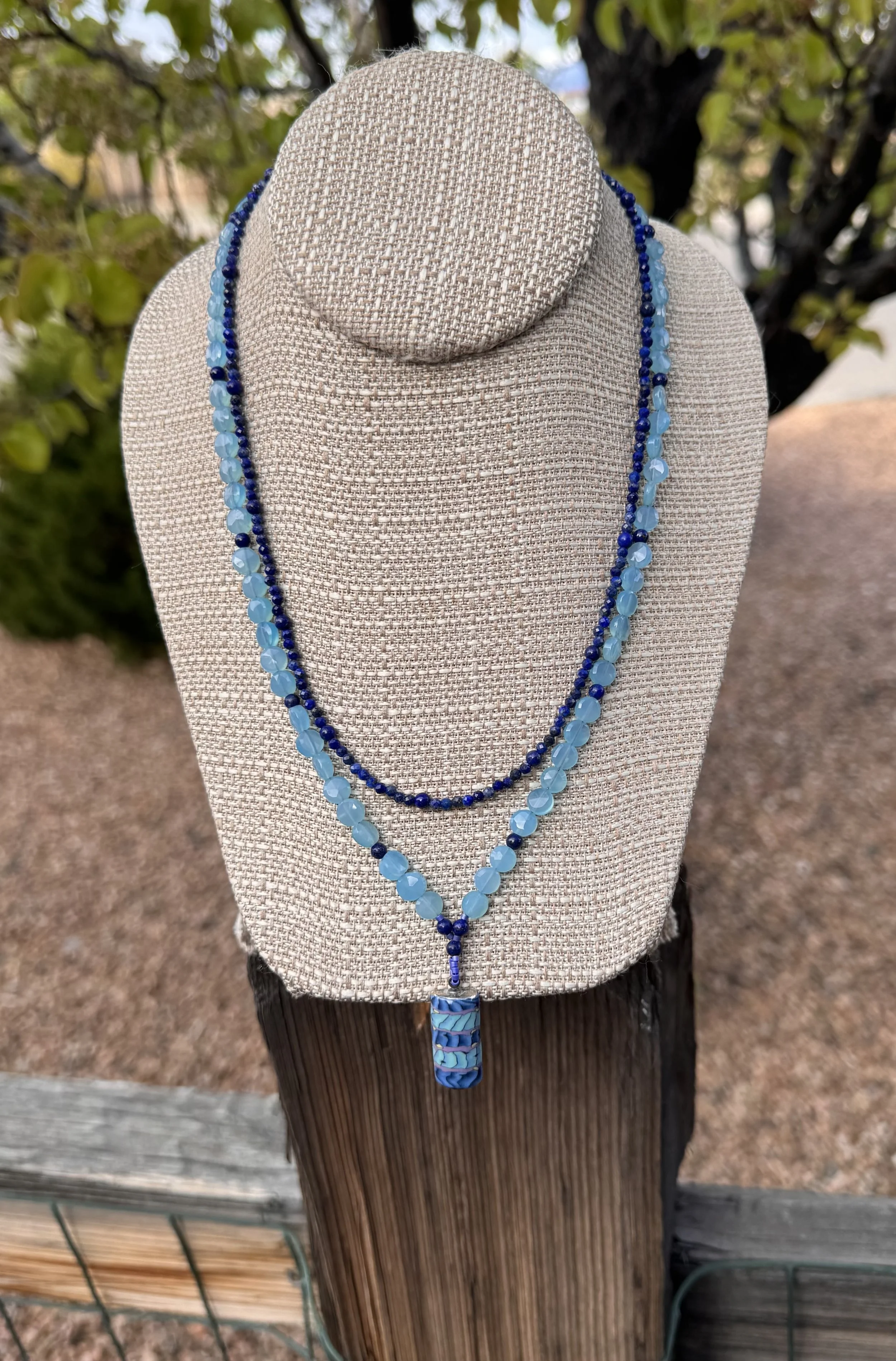
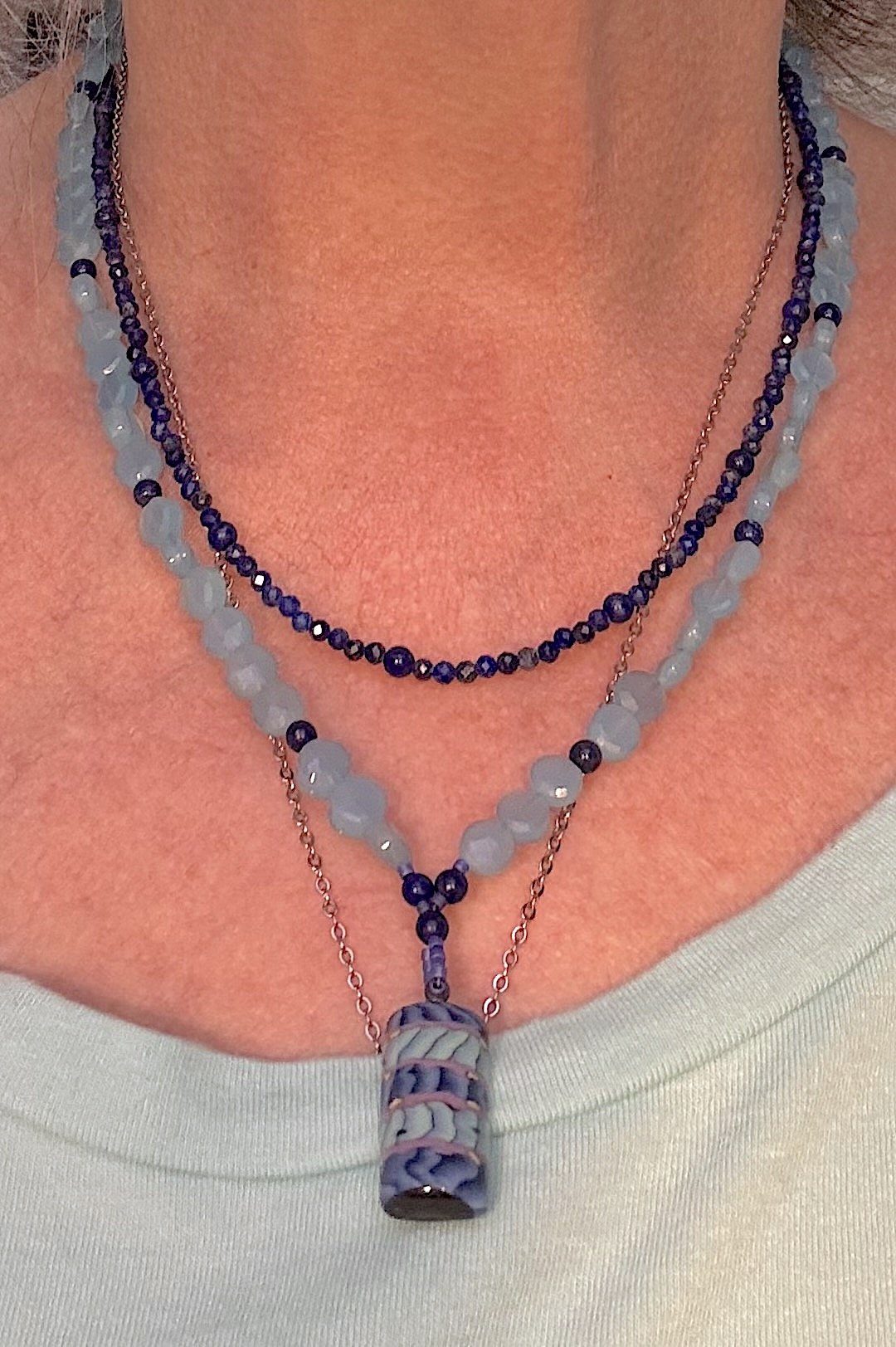
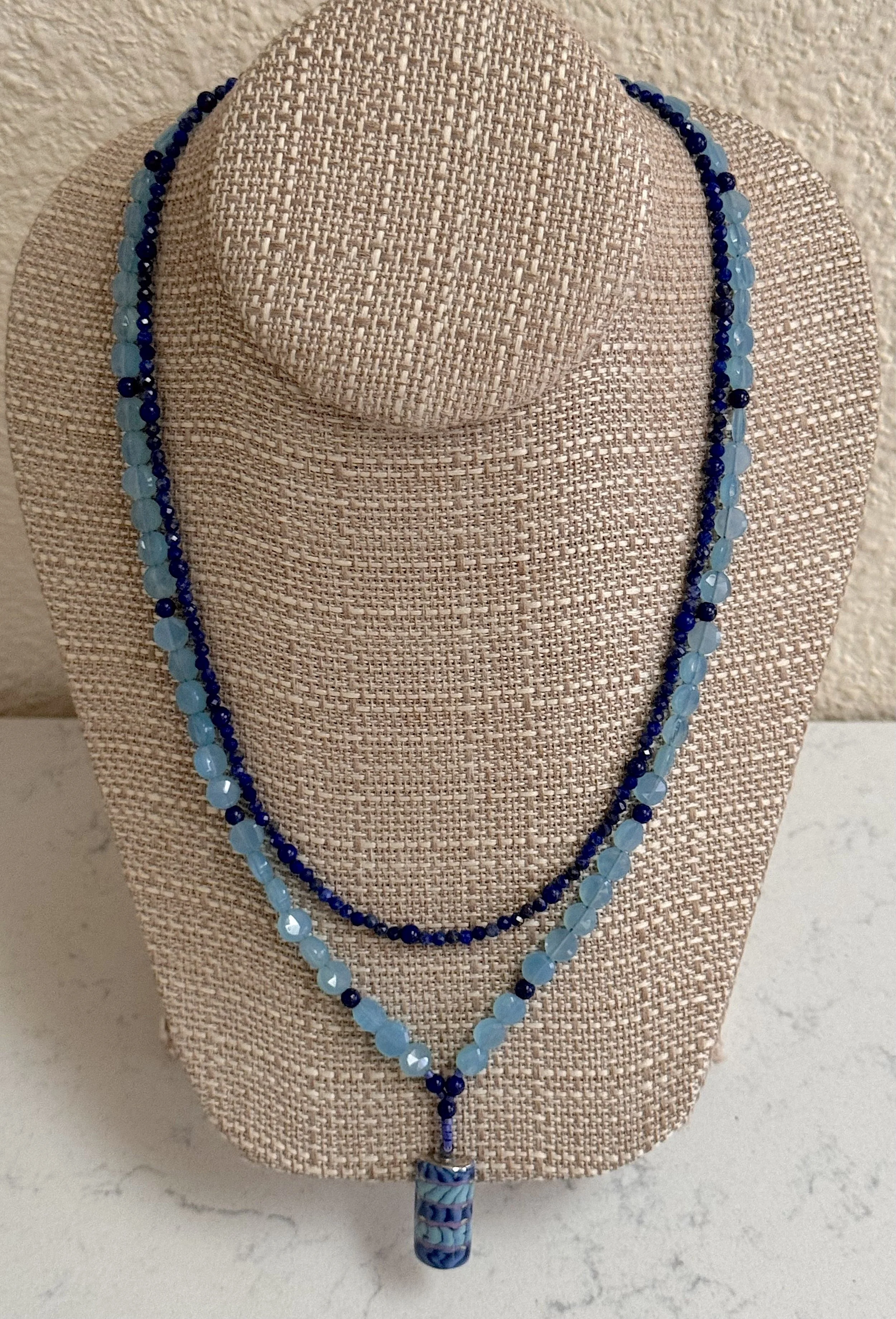
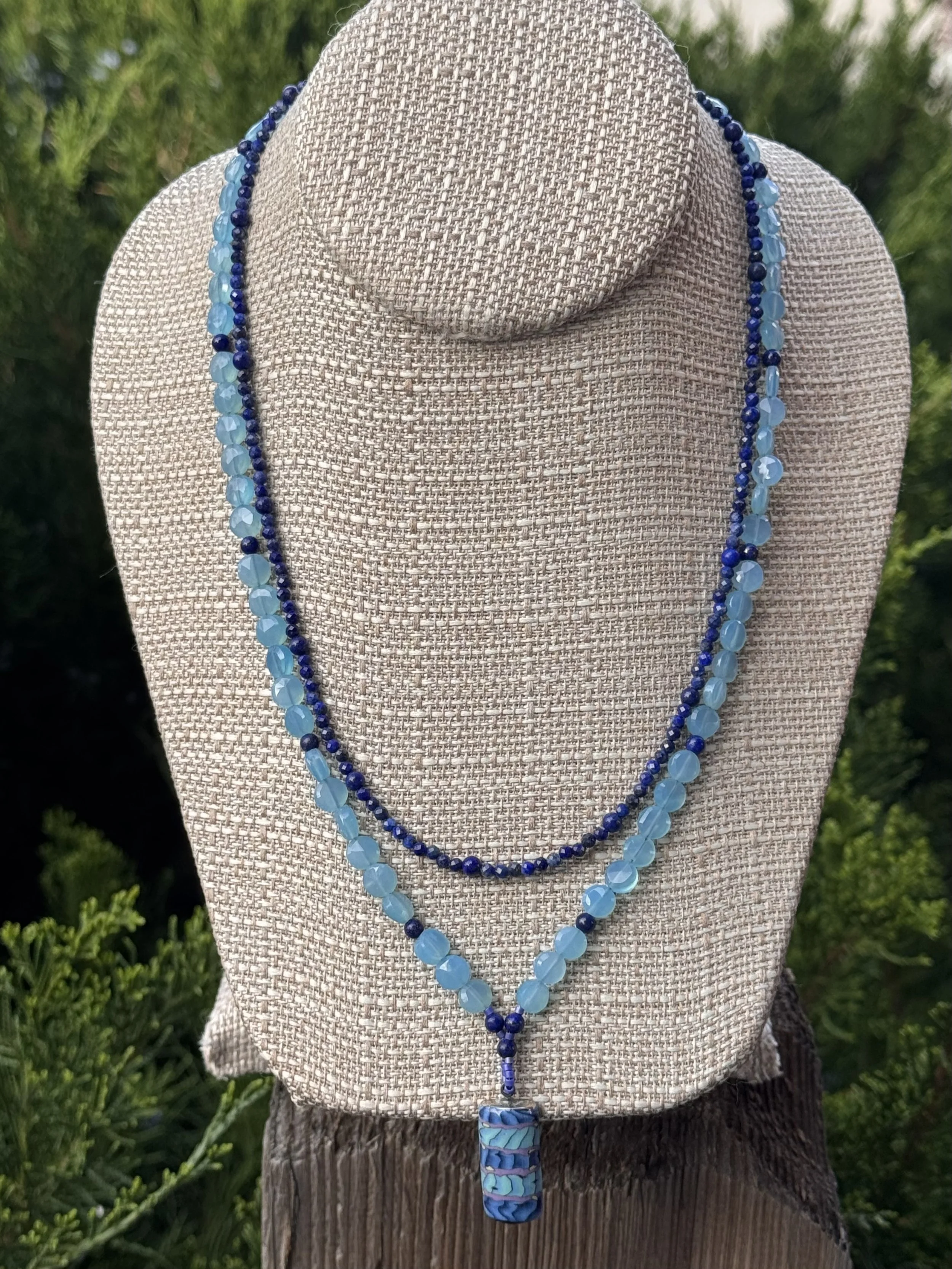
I had a great pair of blue enameled earrings back in the day. Sadly, one disappeared, never to be found again. But. I saved the other earring! I made it the focal and inspirational center point of Blue Jean Baby and built this 2 strand necklace around it's colors,
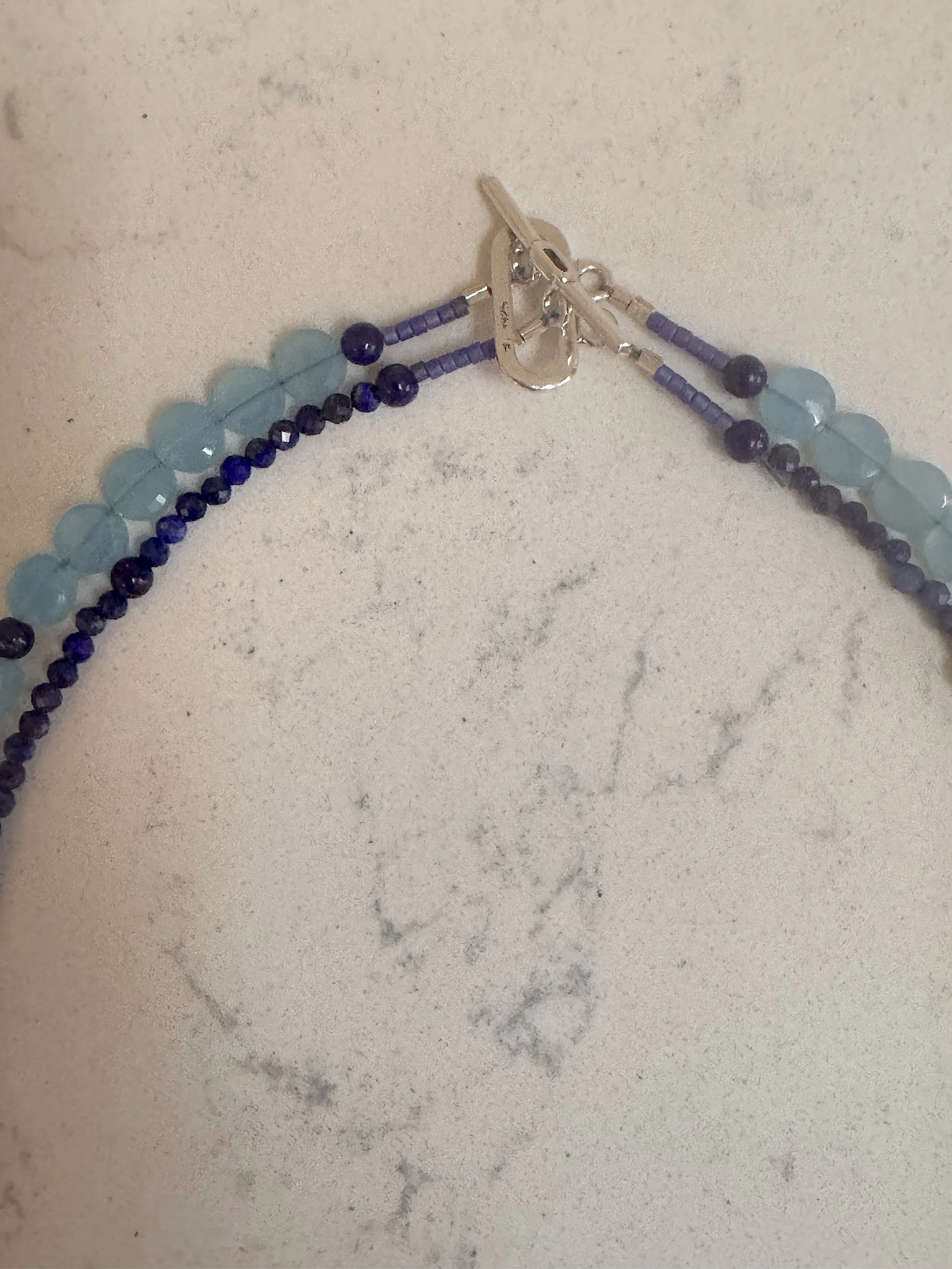
I used Blue Chalcedony faceted discs, 2 sizes of Lapis Lazuli, Delica Glass spacer beads, a Sterling Silver oval toggle clasp and that lonely earring, turned pendant! I think it turned out great!!
Fascinating information from crystalvaults.com states, "Blue Chalcedony is a demure crystal, subtle and mystic, cool and serene, ethereal yet solid. It has an inviting, soft blue translucence, and an almost imperceptible movement within the stone that invokes a stillness of silent reverence. It's calming, and speaks of spirit and trust.
Chalcedony is a member of the Quartz family with a cryptocrystalline structure, perfect for magnifying its crystal energy to soothe and restore balance, from the conscious mind to the inner child, all the way down to the animal self. Its name may be derived from the Greek port city of Chalcedon. The ancient civilizations of Egypt, Greece and Rome used varieties of Chalcedony in jewelry and carvings, and, as gems of antiquity, they were believed to imbue their holders with certain powers. [Simmons, 104-105]
Chalcedony is known as the Speaker's Stone, the stone of one who must measure his words. It encourages reflection and meditation, its gentle radiance preparing us for action but helping to hold back words we might regret. The great Roman orator, Cicero, is said to have worn one around his neck. [Megemont, 49-50]
Considered a nurturing stone, Chalcedony absorbs negative energy and dissipates it before it can be passed on. It promotes brotherhood and good will, opening the mind to new ideas, instilling feelings of benevolence and generosity. [Melody, 193][Hall, 101-102]
Chalcedony was considered a sacred stone by the Native American Indians, using it to promote stability during their ceremonial activities. It is still in use today for meditations, and as a pathway for receiving successful thought transmissions. [Melody, 193]
Chalcedony is useful for treating chronic hoarseness and inflammation of the throat. It protects against weakness in general, bad moods, obsessive jealousy and depression. It reduces sleepwalking, soothes chilblains, and is a source of protection during travel. [Megemont, 50]
Blue Chalcedony encourages the flow of fluids within the body and reduces edema. It helps with sensitivity caused by weather changes or pressure, such as glaucoma, and stimulates milk production in nursing mothers. [Gienger, 22][Hall, 102] It helps alleviate plant allergies, hay fever, and other respiratory problems. It aids in the treatment of Alzheimer's and dementia, childhood illnesses, gallstones and inflammation, and may soothe the symptoms of autism and Asperger's disease, Tourette's syndrome, bi-polar and obsessive compulsive disorders. [Eason, 244]
Chalcedony eases self-doubt and brings a helpful peace to inner reflection. It can remove hostility and encourage a light-hearted optimism. [Hall, 102]
Blue Chalcedony calms and centers the emotional energy field. It is an excellent crystal for those who tend to worry, by encouraging life in the present instead of projecting into an imaginary future. It also assists in calming those with bouts of irrational anger, fear, panic or anxiety, and helps those who speak too quickly before considering the impact their words have on others. [Ahsian, 105]
As a stone of communication, Blue Chalcedony stimulates the Throat Chakra. The Throat Chakra is the voice of the body, a pressure valve that allows the energy from the other chakras to be expressed. If it is blocked or out of balance, it can affect the health of the other chakras. In balance, it allows for the expression of what we think and what we feel.
We can communicate our ideas, beliefs, and emotions. When the throat chakra is in balance and open, we can bring our personal truth out into the world. We have an easy flow of energy within the body and spirit. The energy that springs upward from the lower chakras can continue its path enabling free expression and natural release.
Blue Chalcedony is a powerful stone for communicating with Spirit and can be used to encourage speaking in tongues or the language of Light. It is very beneficial in repairing wounds and deep anger patterns in the energy field. [Ahsian, 105]
It stimulates telepathy and all communications with the invisible realms, assisting in the remembrance of past lives and articulating regained wisdom. Because it connects to the subconscious, Blue Chalcedony is a good stone for those in therapy or those who counsel others. [Simmons, 105]".
WOW! I had no idea it was so potential helpful!!
As per firemountaingems.com, "Lapis lazuli is one of the oldest opaque gemstones in history—more than 6,500 years old! This rich blue stone includes tiny flecks of mica, like a night sky full of stars. Its most well-known source is deep in the mountains of modern Afghanistan.
This stone's two-part name comes from two different cultures: lapis is a Latin word meaning "stone," while lazuli comes from the Persian word lazhuward, meaning "blue." It is not an element nor a mineral—it is a rock containing multiple minerals: lazurite, diopside, calcite, pyrite and more.
Biblical scholars believe that references in the Old Testament to "sapphire" actually indicate lapis lazuli, as the sapphire gemstone was not known in the Middle East before the Roman Empire. Beloved by the ancient Egyptians, Babylonians, Minoans, Chinese, Greeks and up to the Romans, this deep blue stone has been used in the finest of art through the ages. One of the most famous uses of the stone is in the death mask of King Tutankhamen, where it is inlaid, along with turquoise and carnelian, in bright gold. One of his successors, Cleopatra, was known to use ground lapis lazuli as eyeshadow. Marco Polo wrote about the lapis lazuli mines way back in 1271!
In the Middle Ages, painters ground up lapis lazuli to make the deep blue paint called ultramarine—the blue used to paint the robes of Mary of Nazareth on church walls and ceilings like in the Sistine Chapel. Meanwhile in South America, pre-Columbian cultures such as the Diguita and Inca were carving, trading and warring over lapis lazuli from mines in what are now Argentina and Chile.
The Sumerians believed that the spirit of their gods lived within the stone, while the ancient Egyptians saw it as a symbol of the night sky. Since the earliest of times, lapis lazuli meaning has been associated with royalty, strength and courage, wisdom and intellect, friendship and truth.
From antiquity, lapis lazuli has been worn in the belief that it will ward off evil. In ancient Egypt, it was powdered and worn about the eyes to improve eyesight."
In color therapy, stones of deep blue, especially cobalt blue, are said to help the wearer "Speak Their Truth"!
Add Blue Jean Baby to your jewelry collection and Speak Your Truth!