

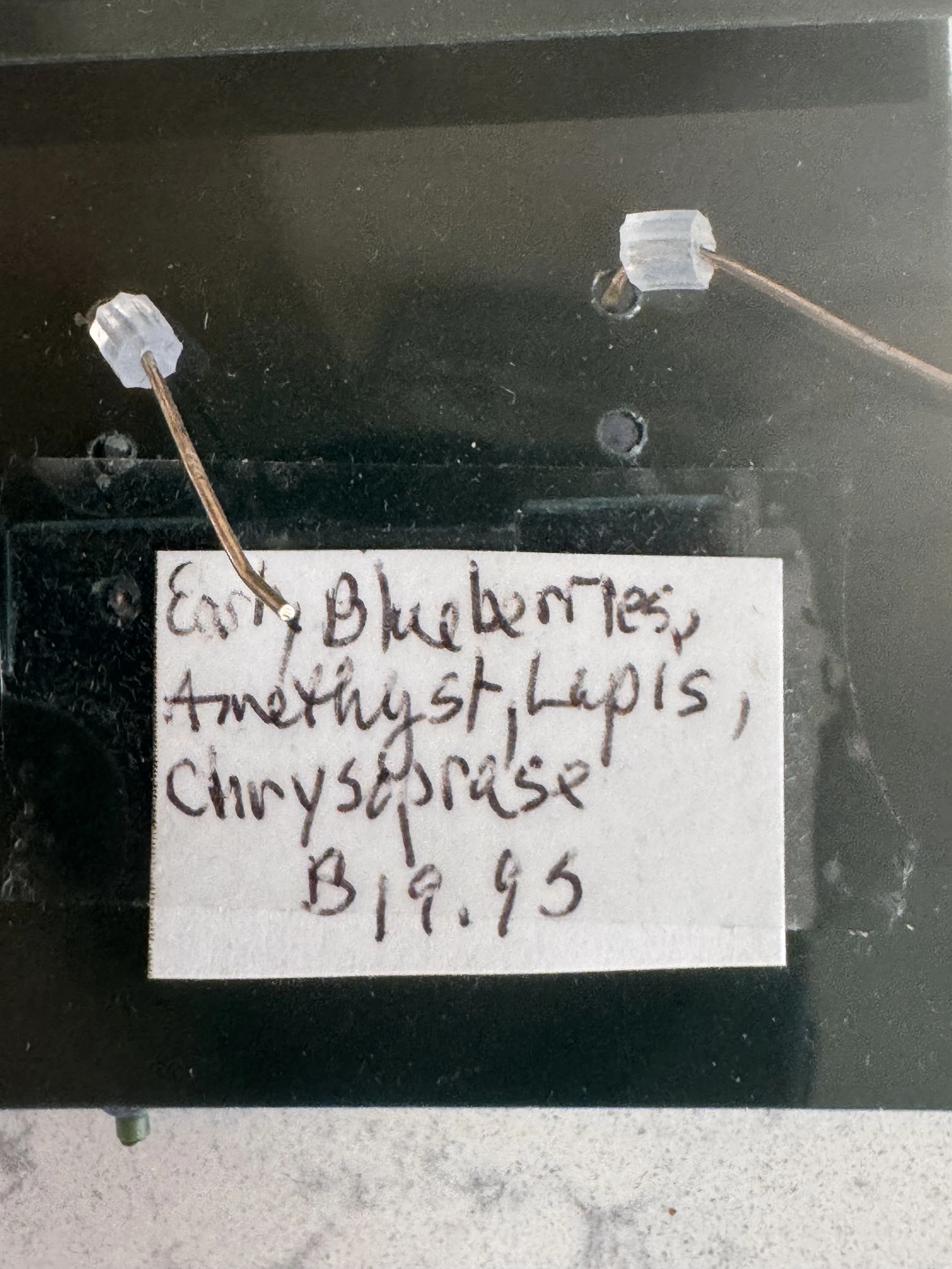
Early Blueberries! Amethyst, Lapis and Chrysoprase beaded earrings
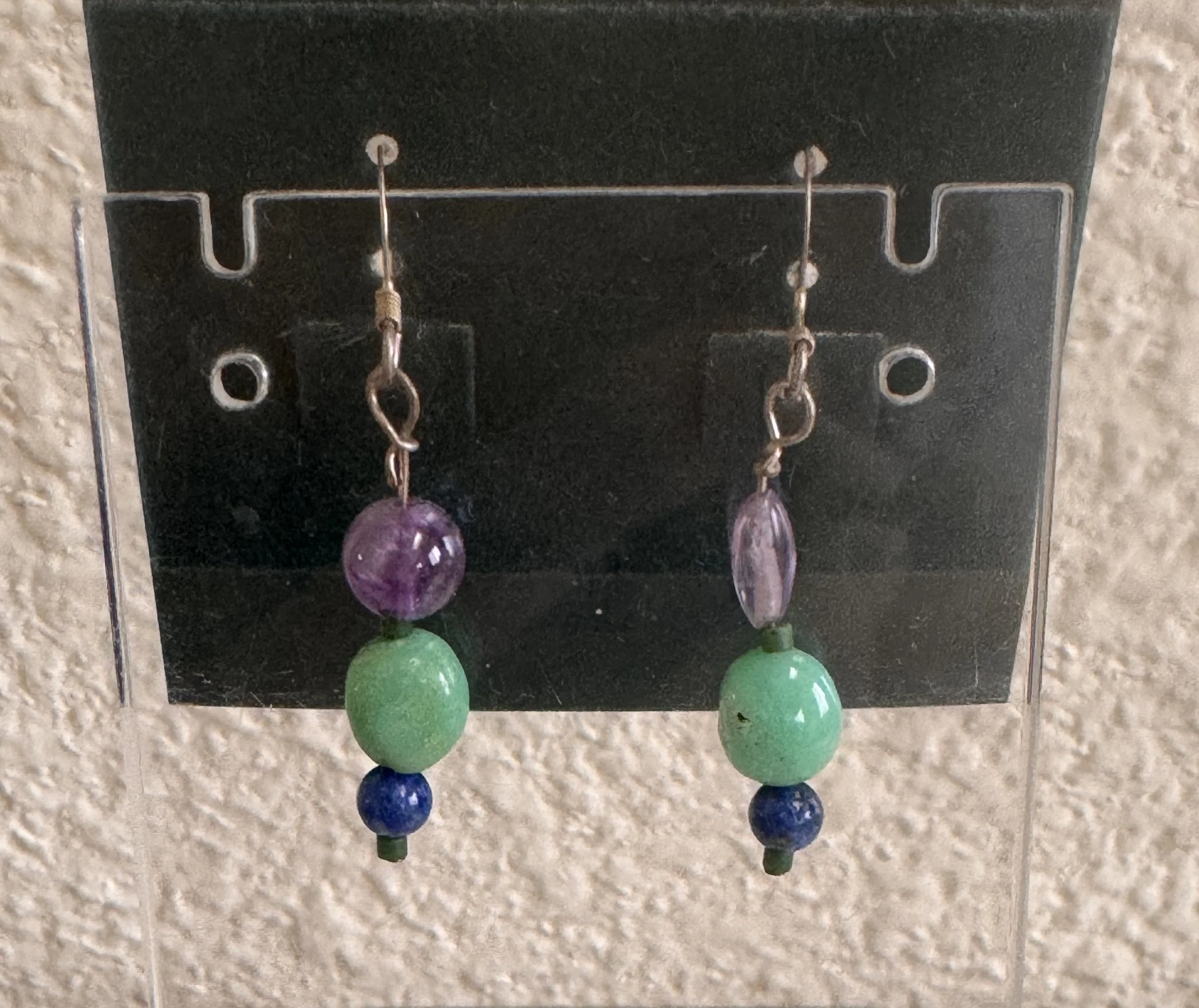
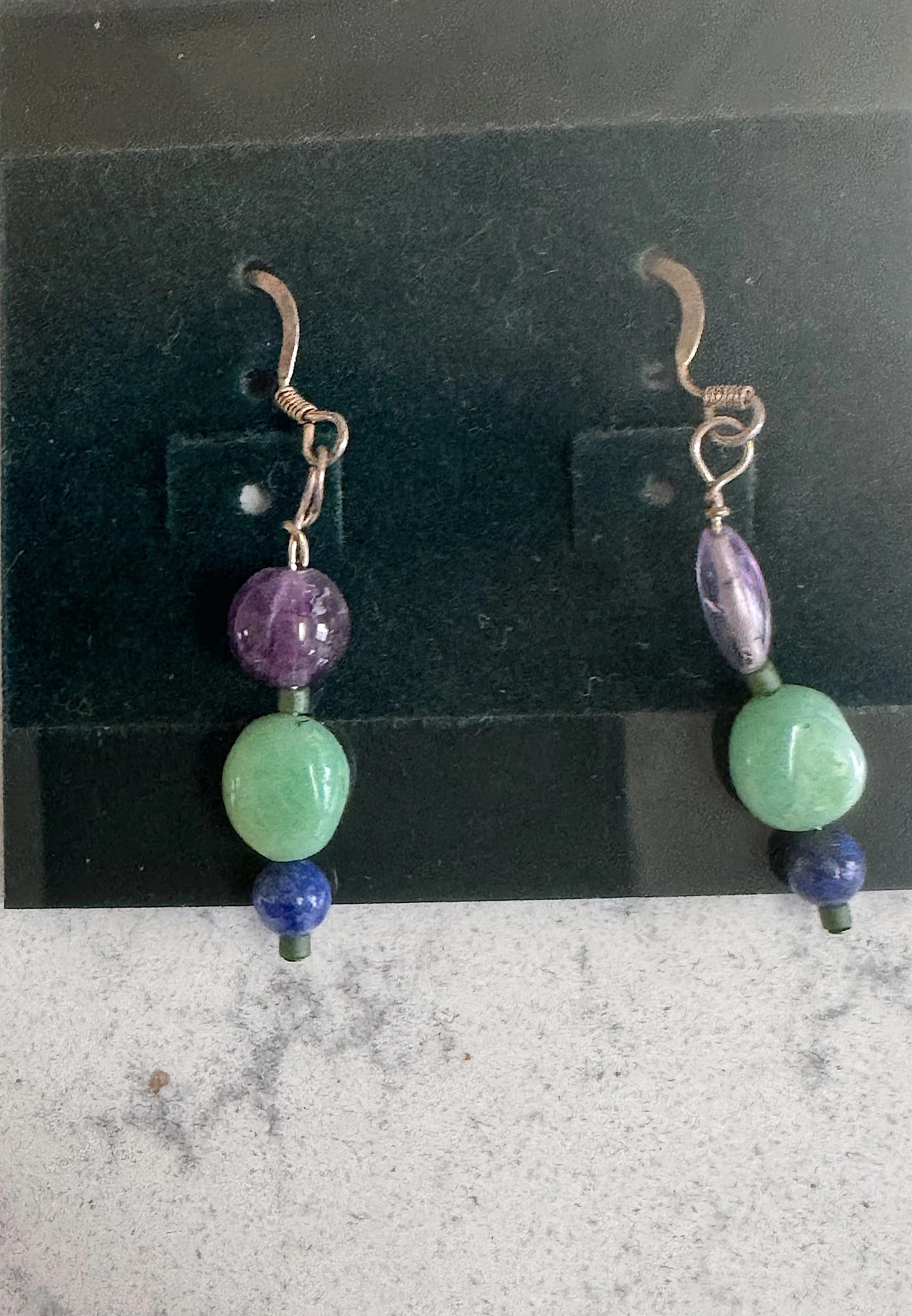
Early Blueberries! Amethyst, Lapis and Chrysoprase beaded earrings
Early Blueberries is my nod to the blueberries as they begin to ripen on the Blueberry Bushes! I used Amethyst, Chrysoprase and Lapis along with Delica Glass spacer beads and Sterling Silver ear wires. They are 1 ½ inches log and the different bead shapes is intentional!
Amethyst is the birthstone for February, and is also said to be a stone of royalty. As per firemountaingems.com, “Amethyst (pronounced AM-eh-thihst) is one of the most common—and popular—gemstone materials. This variety of quartz ranges in color from deep purple to pale lavender depending on the presence of manganese and iron.
The origin of this gemstone, according to the ancient Greeks, was the nymph Amethystos. She resisted the advances of Dionysus, god of wine and revelry, praying for protection. The virgin goddess Artemis answered, transforming her into a clear or white stone. Dionysus, in despair or regret, poured wine over it—dyeing the crystal purple and creating what we now know as amethyst.
With purple being the color of royalty in the ancient Mediterranean, amethyst quickly became a symbol of power and wealth. It adorned the robes and crowns of monarchs and was valued as highly as ruby, emerald, and sapphire. Amethyst continues to hold court in the regalia of royalty and religious leaders alike—including pieces in the British Crown Jewels and those worn by officials in the Church of Scotland and Roman Catholic Church.
Amethyst is also the birthstone for February. Amethyst meaning today often connects to peace, clarity and spiritual growth, making it a thoughtful gift and a powerful choice in jewelry design.
Because of its mythic association with sobriety, amethyst has long been believed to prevent intoxication and curb indulgence. These amethyst properties have made the stone a symbol of clarity, discipline and wisdom. Worn to enhance decision-making and protect the mind, amethyst was often gifted to young warriors to promote clear thinking in battle.
Leonardo da Vinci claimed amethyst could dispel evil thoughts and sharpen the intellect. It has been used by healers to heighten intuition and spiritual awareness. Across cultures, amethyst meaning represents peace, serenity and unity. Many people use amethyst during meditation for spiritual balance and clarity.
Some naturopaths also associate amethyst with supporting sleep, regulating sugar imbalances and relieving headaches.”
“Called the stone of Venus, chrysoprase is the rarest and most valuable rich apple-green gemstone in the chalcedony family and was often mistaken for emeralds by ancient jewelers. Unlike emeralds, which owe their color to the presence of chromium, the bright spring green of chrysoprase is a result of trace amounts of nickel.
Chrysoprase was used by the Greeks, Romans and Egyptians to make seals, signets, jewelry and other ornamental objects because of its vivid color. The modern word comes from the literal Greek translation chrusos, meaning golden, and prason, meaning leek, indicating the golden-leek green color of the stone.
Alexander III, an ancient Greek king of Macedonia, was one of the most successful, undefeated military commanders in Greek history. A strange story regarding a chrysoprase stone reputed to have been worn by Alexander is related by a Dominican friar named Albertus Magnus.
According to Magnus, Alexander always wore a girdle into battle that was embedded with a bright chrysoprase stone. On his return from a successful campaign in India, he laid aside his girdle to bathe in the Euphrates River. While the girdle lay unattended, a serpent came and bit off the stone and dropped it into the water. Alexander III didn't win another campaign after losing this precious talisman.
After the discovery of the tomb of Tutankhamen in the early 1920s, the well-known Art Nouveau period, which celebrated exotic sensuality and romanticism, came to life in prolific glory. Chrysoprase was used extensively during this Nouveau era with Egyptian revival jewelry that mimicked the vast treasures of the newly discovered pharaoh's tomb.
Chrysoprase is one of the birthstones for May and has traditionally symbolized happiness, enterprise and prudence. It is a powerful stone that brings good fortune and prosperity. Chrysoprase properties include instilling you with poise and grace and helping you to recognize the gentle beauty within yourself so you can enjoy self-expression and courage through fluent speech and mental dexterity.
Mentally, chrysoprase encourages non-judgmental attitudes, can reduce superiority and inferiority complexes and can help you avoid speaking out unthinkingly in anger. It bolsters clarity of thought and creativity by attracting abundance and success in new ventures and promotes fidelity within business.
Emotionally, chrysoprase is said to help heal a broken heart by providing a gentle boost to your self-esteem, equalizing emotional balance and fostering acceptance of change and tolerance for others.”
“Lapis lazuli is one of the oldest opaque gemstones in history—more than 6,500 years old! This rich blue stone includes tiny flecks of mica, like a night sky full of stars. Its most well-known source is deep in the mountains of modern Afghanistan.
This stone's two-part name comes from two different cultures: lapis is a Latin word meaning "stone," while lazuli comes from the Persian word lazhuward, meaning "blue." It is not an element nor a mineral—it is a rock containing multiple minerals: lazurite, diopside, calcite, pyrite and more.
Biblical scholars believe that references in the Old Testament to "sapphire" actually indicate lapis lazuli, as the sapphire gemstone was not known in the Middle East before the Roman Empire. Beloved by the ancient Egyptians, Babylonians, Minoans, Chinese, Greeks and up to the Romans, this deep blue stone has been used in the finest of art through the ages. One of the most famous uses of the stone is in the death mask of King Tutankhamen, where it is inlaid, along with turquoise and carnelian, in bright gold. One of his successors, Cleopatra, was known to use ground lapis lazuli as eyeshadow. Marco Polo wrote about the lapis lazuli mines way back in 1271!
In the Middle Ages, painters ground up lapis lazuli to make the deep blue paint called ultramarine—the blue used to paint the robes of Mary of Nazareth on church walls and ceilings like in the Sistine Chapel. Meanwhile in South America, pre-Columbian cultures such as the Diguita and Inca were carving, trading and warring over lapis lazuli from mines in what are now Argentina and Chile.
The Sumerians believed that the spirit of their gods lived within the stone, while the ancient Egyptians saw it as a symbol of the night sky. Since the earliest of times, lapis lazuli meaning has been associated with royalty, strength and courage, wisdom and intellect, friendship and truth.
From antiquity, lapis lazuli has been worn in the belief that it will ward off evil. In ancient Egypt, it was powdered and worn about the eyes to improve eyesight.”
Wow! So much potential is in these earrings! Great year round colors, and wil go with so many outfits, Early Blueberries will become your favorites!